
🎯 Why Start Running?
-
Running improves cardiovascular health, mental well‑being, and longevity—studies show 75 minutes/week of running can slow biological aging by as much as 12 years ASICS+8RUN | Powered by Outside+8YouTube+8Tom’s Guide.
-
It’s accessible: no gym membership required, just shoes and motivation.
-
It builds consistency and self-confidence: running a few minutes at first is better than doing nothing.
Step 1: Get a Health Check and Set Goals
Medical Considerations
If you have pre‑existing conditions (like heart issues, joint problems), check with a doctor before you begin The Running ChannelVerywell HealthThe Guardian.
Define Your “Why”
-
Is it to improve fitness, run a 5K or half-marathon, lose weight, or reduce stress?
-
Realistic goals: e.g. finish a Couch to 5K in 9 weeks, or run 20 minutes straight after 6–8 weeks of training Wikipedia+1Runner’s World+1.
Step 2: Prepare Gear & Your Path
Running Shoes
Invest in proper cushioned running shoes: visit a running store for a gait analysis—it can significantly reduce injury risk sunnyhealthfitness.com+15thetimes.co.uk+15The Guardian+15.
Clothing & Essentials
Wear breathable, moisture-wicking clothing. Accessories like waist-worn phone holders or armbands help keep your hands free and comfortable ASICS.
Step 3: Start Slow with a Run–Walk Approach
Why Run–Walk?
-
Methods like the Jeff Galloway method (Jeffing) mix short runs and recovery walks to reduce fatigue and injury risk jeffgalloway.com+2Tom’s Guide+2nypost.com+2.
-
Builds sustainable endurance—many beginners can run 5K injury‑free after 9 weeks nypost.com+2Wikipedia+2The Guardian+2.
Sample Beginners Plan: 6 Weeks to 30 Minutes Running
Adapted from Outside magazine and REI:
-
Week 1: Walk 5 min warm‑up, then 10×(1 min run + 1 min walk). Cross‑train Days 2/4. Rest Day 3. Runner’s World+2RUN | Powered by Outside+2Verywell Health+2
-
Week 2: Shift to 2 min run/1 min walk, or similar variations.
-
By Week 3–4: progress toward 4–5 min run intervals, fewer walk breaks.
-
Week 6: 2×14 min running or continuous 30 min run. Well done! RUN | Powered by Outside
Frequency & Duration
-
Start with 20 min, 3× per week; gradually increase frequency and time Runner’s WorldThe GuardianVerywell Health.
-
Avoid consecutive run days to allow recovery Verywell Health.
Step 4: Warm-Up, Cool Down, and Cross-Train
Warm-Up
Do 5 minutes of brisk walking and dynamic moves: lunges, squats, high knees, butt kicks. It boosts circulation and neuromuscular readiness Runner’s Worldrei.com.
Cool Down
Finish sessions with walking and light foam rolling or stretching to aid recovery and reduce soreness Runner’s WorldThe Running Channel.
Cross-Training & Strength
Add low-impact cardio (cycling, swimming) or Pilates, plus strength training 2× weeks to build muscle balance and avoid overuse injuries thetimes.co.ukgq.comjeffgalloway.commarieclaire.co.uk.
Step 5: Form & Breathing Essentials
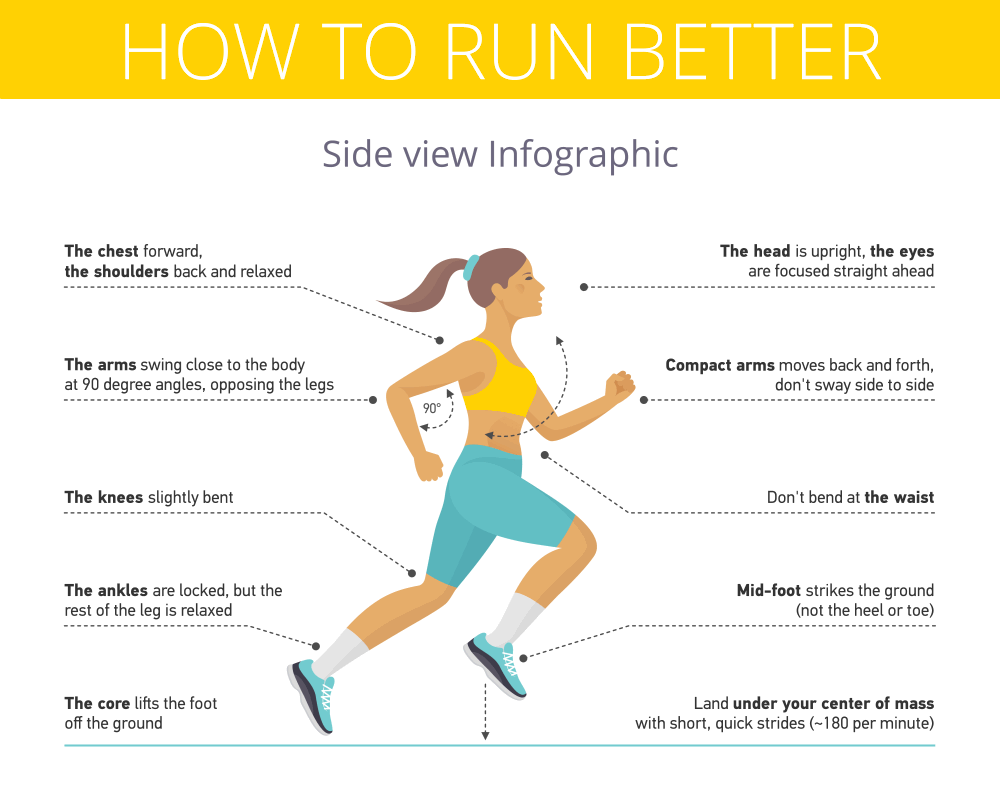
Proper Running Form
-
Posture: run tall, gaze 15–20 feet ahead, maintain a slight lean from ankles, not hips Shape.
-
Arm & Leg Movement: arms at ~90°, swing forward/back without crossing midline; land with mid‑foot under body rei.comReddit.
-
Foot strike: light, relaxed — land mid‑foot, roll forward, push off toes rather than stomping tudungpeople.com.
Breathing
-
Use diaphragmatic (“belly”) breathing, inhaling deeply to reduce fatigue and support endurance whatsavvysaid.comVerywell HealthReddit.
-
Aim for a conversational pace, where you can speak full sentences while running The Guardian+1Running Shoes Guru+1.
Step 6: Gradual Progression
Increase cautiously
-
Follow the 10% rule: don’t increase mileage or intensity by more than 10% per week to prevent overuse injuries like shin splints, tendinitis, stress fractures healthy.kaiserpermanente.org+1ASICS+1.
Vary Training
-
Alternate easy runs, occasional short speed intervals (only after base fitness), and cross-training days thetimes.co.ukjeffgalloway.commarieclaire.co.uk.
Step 7: Nutrition, Hydration & Recovery
Fuel Smartly
-
Eat a balanced diet with carbs for energy (whole grains, fruits), protein for muscle repair, healthy fats.
-
Avoid running right after a big meal; small pre-run snacks like banana or toast are fine.
Hydrate Appropriately
-
Drink water before and after runs; in hot climates or longer sessions, consider electrolyte beverages.
Sleep & Rest
-
Aim for 7–9 hours of sleep per night.
-
Incorporate rest days; avoid back-to-back intense sessions; walk if you’re recovering after a hard session or race jeffgalloway.comthetimes.co.uk.
Step 8: Common Beginner Mistakes & How to Avoid Them
Here are frequent pitfalls and strategies to stay on track:
1. Doing Too Much Too Soon
“Doing too much too soon … will cause injuries faster than you could imagine” Reddit.
Stick to small increments. Use run‑walk methods to build capacity safely.
2. Running Too Fast
Pushing pace before you have endurance leads to burnout, fatigue, or injury. Beginners should stay at easy conversational pace The Running ChannelRedditgq.com.
3. Ignoring Rest & Recovery
Skipping rest days or overtraining weakens your body. Rest ensures adaptation and prevents injury jeffgalloway.comThe Guardianhealthy.kaiserpermanente.org.
4. Overstriding or Poor Form
Overextending stride (especially downhill) increases impact and injury risk. Aim for shorter, quicker turnover instead jeffgalloway.comhealthy.kaiserpermanente.org.
5. Improper Footwear
Using non‑running or old shoes can misalign gait, reduce shock absorption, and lead to injuries thetimes.co.ukhealthy.kaiserpermanente.org.
6. Skipping Warm-Up or Cool-Down
Cold muscles are prone to strain. Skipping dynamic warm-ups or cooldown stretches increases fatigue and DOMS (delayed-onset muscle soreness) Runner’s Worldrei.comRUN | Powered by OutsideThe Running Channel.
7. Comparing Yourself to Others
Every runner’s journey is unique. Comparing yourself to faster or more experienced runners can harm motivation gq.comThe Running Channel.
Step 9: Track Progress & Stay Motivated
Track Workouts
Use an app or journal to log runs, duration, pace, and feelings. Seeing small gains helps maintain consistency gq.comRunner’s World.
Join a Community
Local running groups, Parkrun events, or virtual communities help with motivation and accountability thetimes.co.uk.
Reward Milestones
Celebrate weekly or monthly progress, even if it’s just adding one more running minute, or achieving 3 runs/week.
Step 10: Beyond Beginner: Setting Bigger Goals
Once comfortable running 30 minutes:
-
Consider structured plans: Couch to 5K, 10K, half-marathon, weight-loss goals, or club training RUN | Powered by Outside.
-
Introduce some variety: occasional longer run, ups and downs, tempo run, or light intervals (only after base training).
-
Continue strength training, mobility work, and cross-training for long-term sustainability.
Checklist Summary (Quick Visual)
| Step | Action |
|---|---|
| 1 | Health check & goal-setting |
| 2 | Proper shoes & gear |
| 3 | Run‑walk method (start slow) |
| 4 | Warm-up, cooldown, cross-train |
| 5 | Learn proper form & breathing |
| 6 | Increase mileage by ≤ 10% per week |
| 7 | Fuel, hydrate, rest |
| 8 | Avoid common mistakes |
| 9 | Track & join community |
| 10 | Set next-level goals |
Real Voices: Lessons from the Community
From Reddit’s r/running:
“Doing too much too soon … will cause you injuries faster than you could imagine.”
“Most of your runs should be ‘easy’ pace… if you start to get out of breath, bring your pace down” Wikipedia+1Tom’s Guide+1arunwithmeghan.wordpress.com+6Business Insider+6ASICS+6Runner’s WorldRunning Shoes GuruThe Guardianmarieclaire.co.ukReddit.
Runner’s World and fitness coaches emphasize: establish consistency before pursuing speed or distance Runner’s Worldgq.com.
Why This Approach Works
-
Gradual build-up helps avoid overuse injuries and keeps motivation high.
-
Walk-run intervals make early steps manageable even for those starting from scratch.
-
Focus on form, recovery, fueling, and community support builds a habit—not burnout.
-
Scientific evidence and expert tips support every step: from gait analysis to strength training and cross-training.
In Closing: Your Beginner’s Running Journey
Starting running is more about consistent action than high intensity. By following this structured plan—starting slow, listening to your body, and focusing on the right gear, form, rest, and pacing—you’ll build confidence and endurance steadily.
Whether your goal is a 5K, improved health, or just the joy of moving, the most important first step is lacing up your shoes and taking a short walk-run out your door. You’ve got this—and now you know exactly how to begin safely and successfully. Happy running!
