Knee Pain Home Treatment: 9 Expert Methods (Plus When You Need a Doctor)
If you’re experiencing pain in your knee and are wondering how to relieve knee pain, then this article is exactly what you need.
Let’s take a look at finding the root cause of your knee pain and the different methods you can use to relieve it effectively.
You shouldn’t just push through the pain or discomfort. There are things that you can do at home, or if you need to, see a doctor.
Diagnosing Knee Pain
There are many causes of knee pain, such as bursitis, osteoarthritis, meniscus tear, etc. Amanda has written a detailed guide listing the 7 common causes of knee pain, but in this article, we’ll discuss the ways you can relieve it in more depth.
In other words, knee pain can mean A LOT of different things. So it’s really important to know what you’re dealing with to help find the best way to resolve it.
If you’ve called your doctor, then it’s time for a diagnosis. Your doctor will do a physical exam to inspect your knee for the symptoms you’re experiencing.
He or she will also move your legs to check how far you can move in different directions and push on or pull the joint to evaluate the integrity of the structure of your knee.
After that, they might suggest tests such as an X-ray, CT scan, ultrasound, or MRI, depending on what they suspect will work the best. For example, MRI is beneficial for diagnosing injuries to soft tissues, such as cartilage, tendons, ligaments, and muscles.
If your doctor suspects an infection or inflammation, you’ll likely be given blood tests and, in some cases, arthrocentesis.
This test involves removing a small amount of fluid from your knee joint with a needle and sending it to a laboratory for analysis.
Expert Methods to Relieve Knee Pain
Let’s look at a few different ways to relieve knee pain. We’ve broken it into two categories to make it easier. Here are a few at-home and doctor options.
At Home Options
1. Strength Training
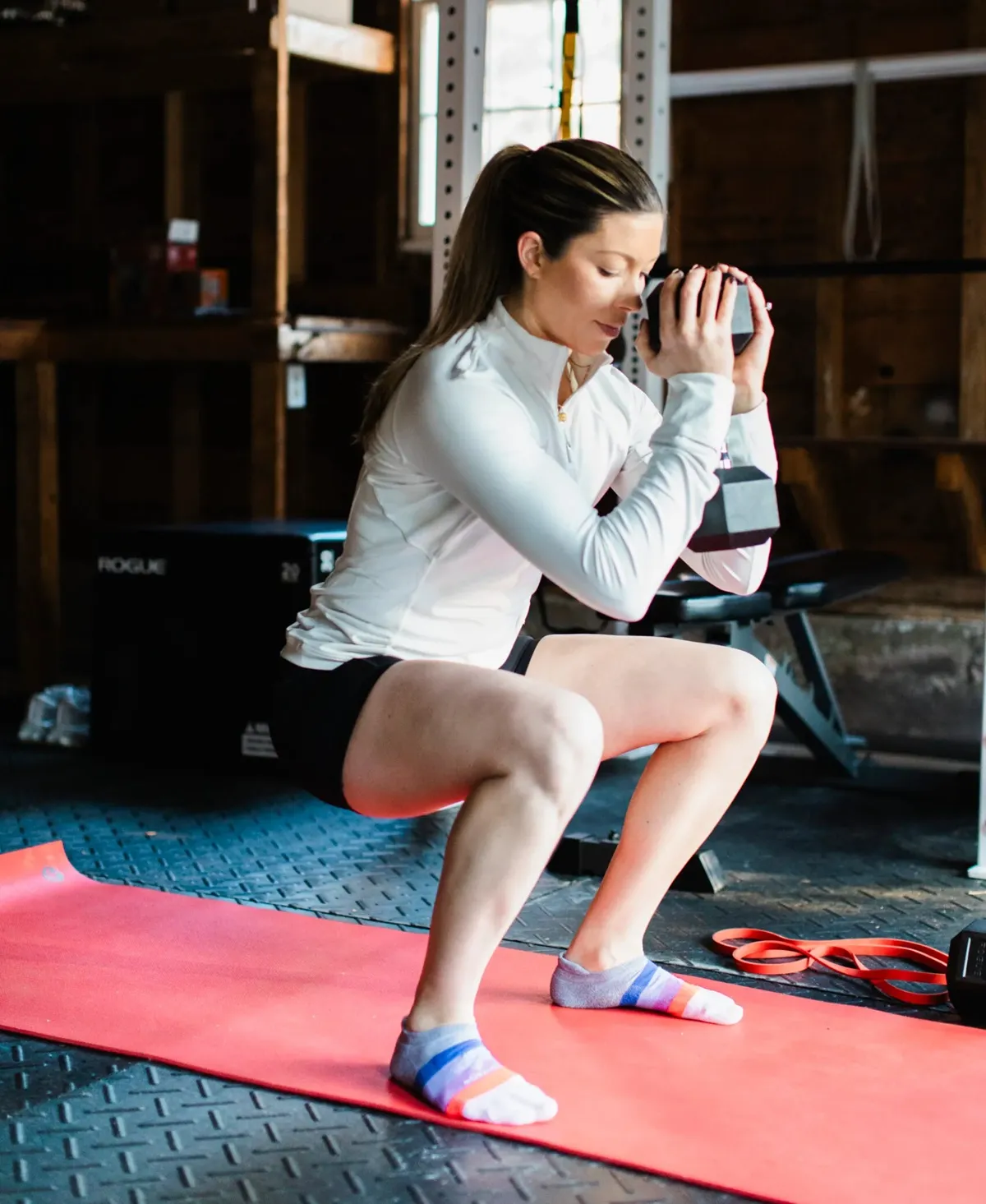
You should never, ever skip strength training or the dynamic warm-up. Neither of these things needs to be overwhelming or overly complicated.
Strengthening exercises for the core, hips, and quadriceps are essential for maintaining knee strength. These exercises not only help to reduce the risk of knee pain but also improve overall physical fitness.
For example, exercises such as lunges, squats, and leg presses can help strengthen the quadriceps. These muscles are important for knee stability and can help to reduce the risk of injuries.
Plus, exercises such as planks and side planks can help strengthen core muscles, improving overall balance and reducing the risk of falls.
👉Start small with 10 minutes a day of core workout!
👉Build from there with strength training for runners programs.
2. Chrip Halo
This is something that you can use at home to help your muscles relax, especially if they’re super tight and pulling at your knee.
Chirp Halo is a combo of an EMS machine for muscle stimulation and strengthening, and a TENS machine for pain relief. Think of the TENS as targeting nerves to stop pain signals, while the EMS creates muscle contractions that can help with recovery from muscle atrophy (after surgery) or an injury.
If you can relax the muscles around your knee, it’ll stop pulling on your knee, and you can resume running. 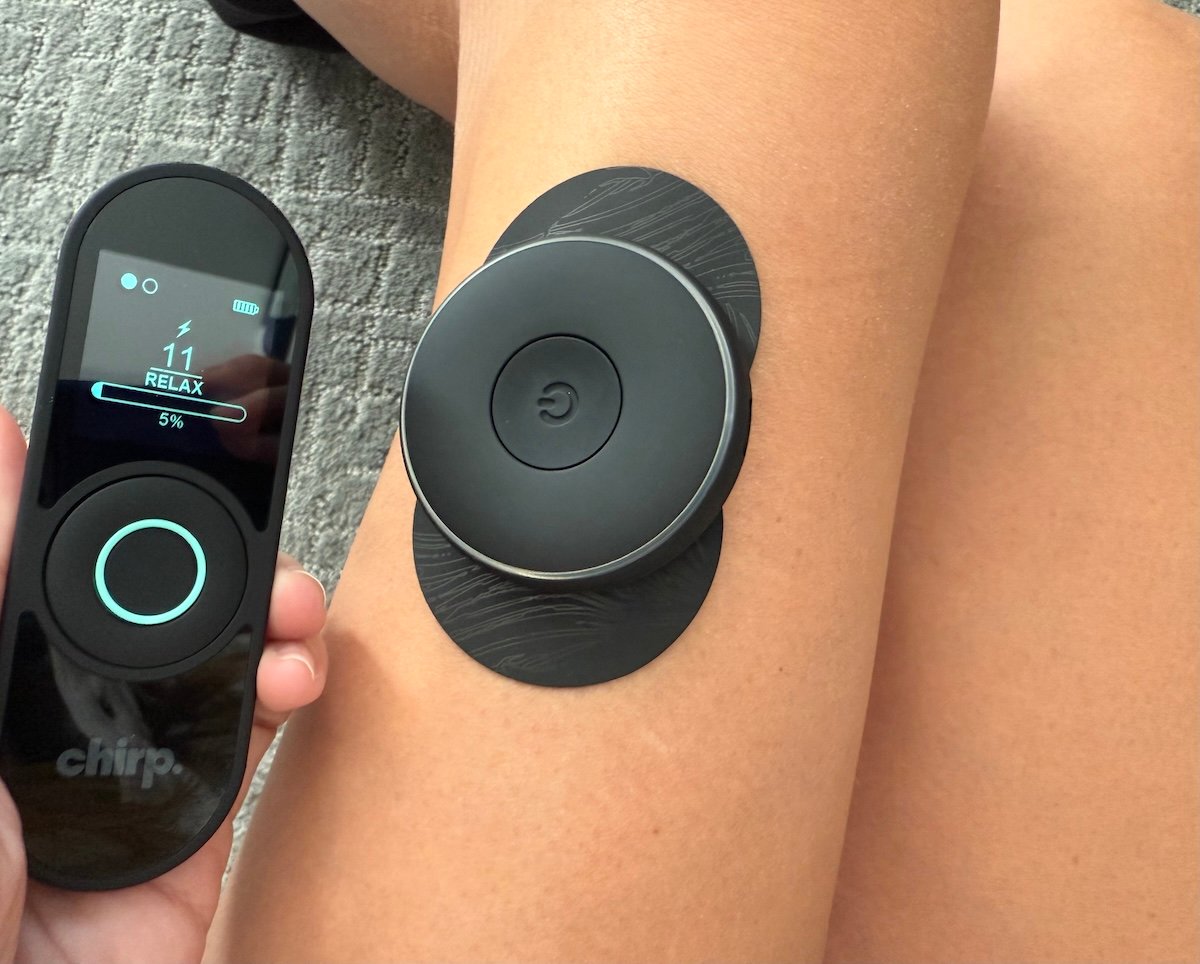
It’s important to remember the thousands of times we’ve told you that a TIGHT MUSCLE is often an overworked muscle. So, just getting something to relax with TENS or foam rolling is not a long-term solution. You need strength workouts, figuring out why that muscle is taking extra load, and watching overall volume.
Seeing a PT or massage therapist in addition to using the Chirp Halo to work out that tightness long-term will make a huge difference.
3. Kinesiology Taping
This was such a win for Amanda. Learning how to truly tape her knee in different ways to create support.
She used it prior to that 2017 surgery to help support the knee, used it to reduce swelling after, and has used it to help treat jumper’s knee.
Amanda prefers it to a brace because it still allows your body to move through the full range of motion and forces us to keep working on all the muscle stability. Kinesiology tape is designed to reduce the load on the underlying tissue.
There are a million different ways to tape that we can’t go in to here, but worth asking your PT or do a quick YouTube search around your type of injury.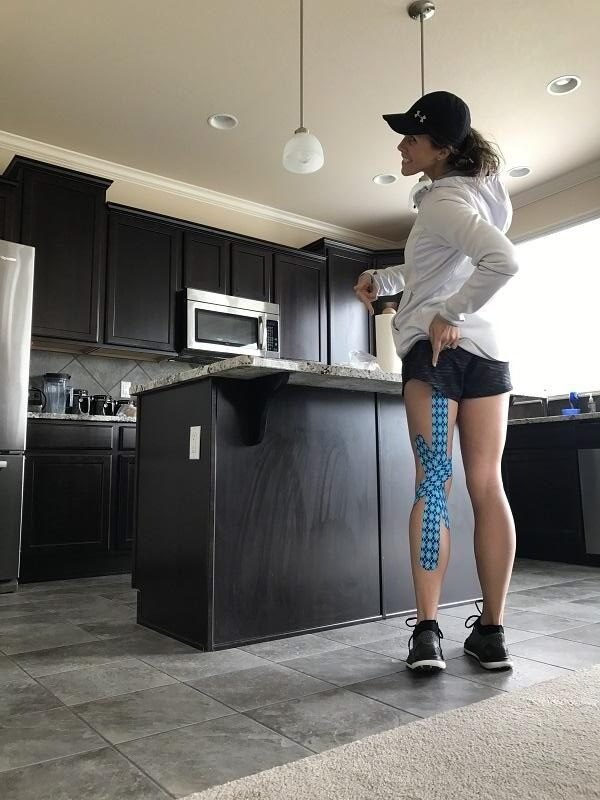
👉Here are other things you can wear to support your knee while working out >>
4. Cross Training
Low-impact exercises such as swimming, cycling, and elliptical training work well alongside running to help you become a better runner.
Including these activities in your workout routine can help reduce the pressure on your knee joint while building endurance. These exercises are also great for cardiovascular health and can help improve you become a stronger and faster runner.
For example, swimming is a great low-impact exercise that can help to improve knee pain and overall physical fitness.
Cycling and using an elliptical machine can also be great options for people with knee pain. These exercises can help to improve endurance and reduce the risk of injuries.
👉Checkout the best cross training for runners >>
5. Over-the-Counter Medications
The most basic method of relieving knee pain, especially if the injury is not acute, is with pain relievers.
Your doctor may recommend taking over-the-counter medications such as ibuprofen (Advil, Motrin, etc.), naproxen sodium (Aleve), or acetaminophen (Tylenol).
These can help reduce inflammation and swelling in cases that aren’t severe and are usually used for the short term.
Although they are over-the-counter medications, you should consult with your doctor before taking them, and they should not be taken for extended periods of time. You don’t want the pain reliever to hide your pain and/or slow down your healing.
REMINDER: Taking a pain reliever so you can run is not advised. Then you’re just masking the symptoms.
Doctor Options
Many times, the knee can gradually get better with simple remedies at home, but there are instances when a medical practitioner needs to get involved.
6. Platelet Rich Plasma (PRP)
So what exactly are PRP injections? A small sample of your blood is placed in a centrifuge to separate the platelets from the other blood components, then the concentrated PRP is injected.
Since platelets help to induce recovery, these injections are designed to increase that concentration for rapid healing.
It’s important to understand that it can take weeks to decide if this is working for you and how long-lasting the effects are seems to vary.
I think for some people it’s enough to get the healing started so their body can take over, for others it becomes an ongoing treatment if they find relief.
The shot is done into the joint, and prior to injecting the platelets, a numbing shot is given which is the only painful part. It’s no worse than getting any other shot.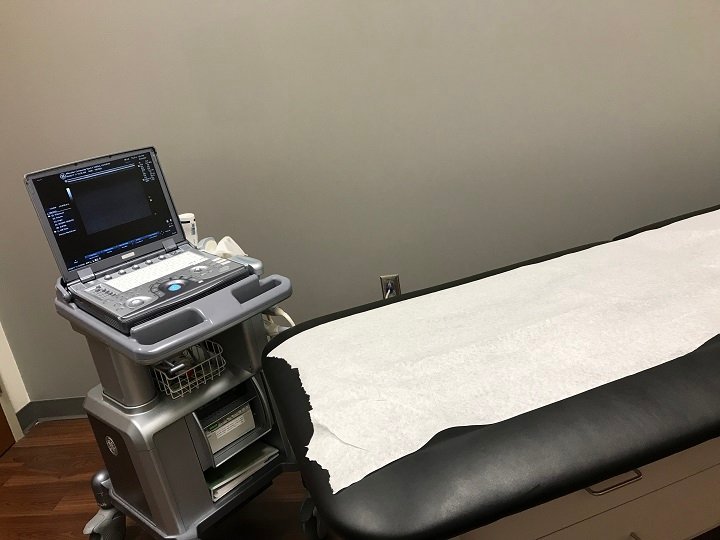 Once the PRP is injected there’s an odd feeling of fullness and for me that traveled immediately to my calf, which was weird but not painful in any way.
In many cases, they use an ultrasound machine to guide the needle into a specific spot. We ended up not needing to do that, as she just went for the joint. The process itself was about an hour because we talked in depth before they drew blood.
Personally, I didn’t see any improvement in my ability to straighten my knee. But this method is said to provide some long-term benefits for arthritis. Further research is required to fully understand the benefits in terms of different injuries and knee conditions.
7. Dry Needling
So what is dry needling anyway? Is it just acupuncture? Nope.
Acupuncture is designed to restore the flow of energy in the body through pathways called meridians and is usually totally painless. Big fan!
Dry needling uses fine filament needles on muscular trigger points to create muscle contractions or to create a muscle release through a process of “resetting”.
By honing in on these spots (yup those same tender ones you find foam rolling) you can often ease localized and referred pain, tenderness, sensitivity, and motor dysfunction.
Trigger points can develop from injury, disease processes, and repetitive stress as occurs in sports or with postural strain.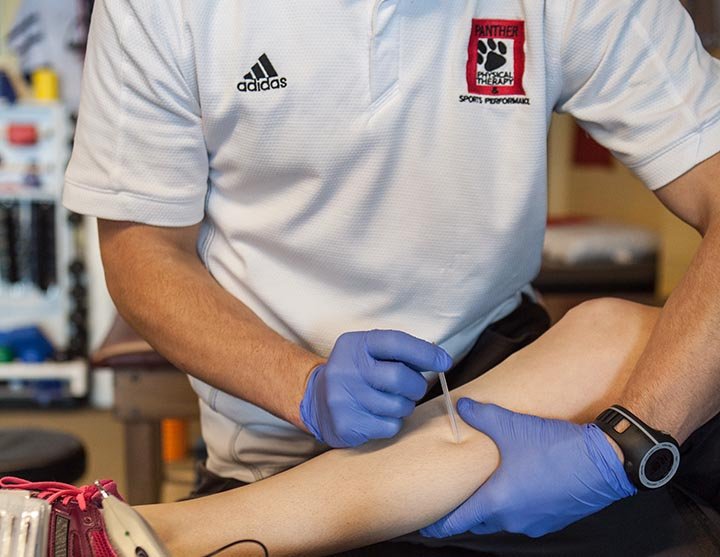
In dry needling, the needles are inserted into those tender muscle tissue spots which create a sensation of cramping or twitching.
Depending on the area it might be mildly uncomfortable for just a moment, to a “holy mother of… why are you trying to kill me” again for just a moment. Then if it’s worked, you tend to feel a great release in the muscle.
Electroacupuncture is another part of needling. They’ll attach a slight pulse to the needle, which will make your muscle jump and helps to really wake up a muscle that might be shut down
8. Active Release Therapy (ART)
Active Release Techniques (ART) are a soft-tissue technique that focuses on relieving tissue tension by removing fibrosis or adhesions that can form in tissues due to repetitive use.
I have used ART way in the past and didn’t feel it was effective for me, but I have friends who swear by it! I think that my chiropractor does a great job of deep muscle tissue work which seems to work best for me.
For those who don’t know ART, here’s a more detailed explanation of what it is:
“ART is a patented, state-of-the-art soft tissue system/movement-based massage technique that treats problems with muscles, tendons, ligaments, fascia, and nerves. Headaches, back pain, carpal tunnel syndrome, shin splints, shoulder pain, sciatica, plantar fasciitis, knee problems, and tennis elbow are just a few of the many conditions that can be resolved quickly and permanently with ART. These conditions all have one important thing in common: they are often a result of overused muscles.”
9. Corticosteroid Injection
Corticosteroid injections, also known as cortisone shots, are injections that can help relieve pain and inflammation in specific areas of the body, including the knee.
These injections usually contain two different medications, namely a corticosteroid medication and a local anesthetic.
A corticosteroid drug injected into your knee joint may help reduce the pain and symptoms of a flare-up of arthritis or relieve inflammation from other knee injuries.
This pain relief may last for a few months, but it’s important to note that these injections are not always effective and do come with certain risks.
I’ve written all about these injections in detail in my cortisone shots in the knee guide.
It’s kind of like a deep tissue sports massage with stretching.
We hope that some of these things help to get you some relief. But rememeber that if the pain and discomfort is still lingering, reach out to your doctor to get things looked at.
Looking for more what to read next?
Other ways to connect with Amanda
Instagram: RunToTheFinish
Facebook: RunToTheFinish
Sign Up to Receive a Weekly Newsletter with Top Running Tips
The post Knee Pain Home Treatment: 9 Expert Methods (Plus When You Need a Doctor) appeared first on RunToTheFinish.