Polar Vs Garmin | Comparing Top Models
With so many GPS watches available in the market, it can be overwhelming to go through all of the reviews to figure out which one is right for you. The first step is to narrow down to a brand, which is probably why you’re here: Polar Vs Garmin.
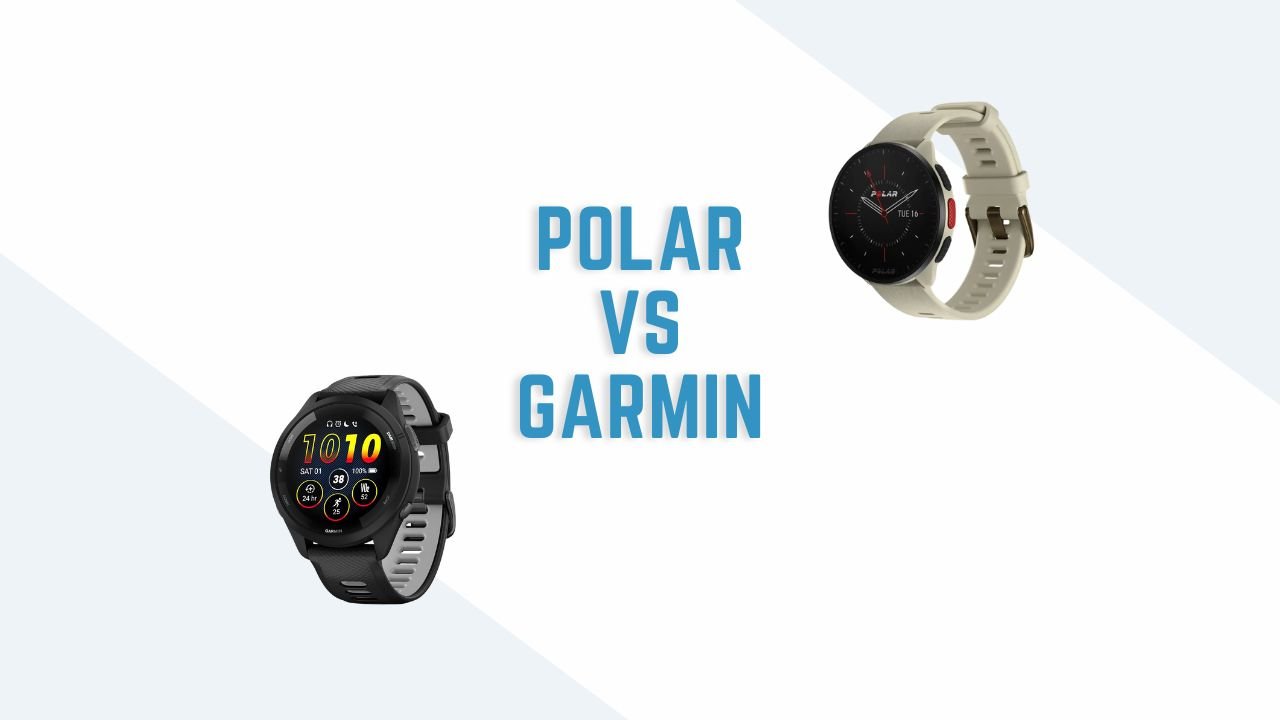
All the well-known brands manufacture have several series of GPS watches with varying features and in a range of prices. All this means is that there is something for everyone.
A few of the major differences with Polar and Garmin:
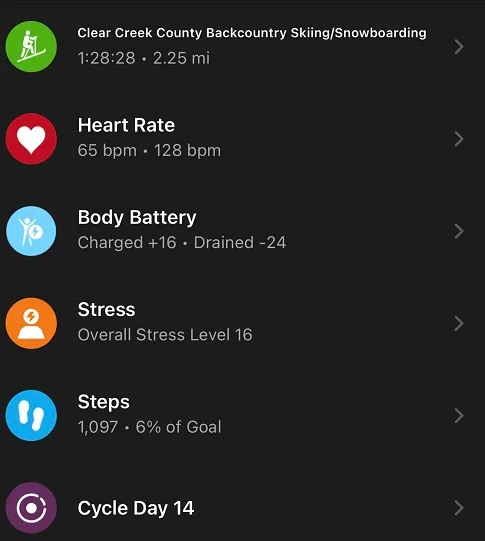
- Garmin wants to be part of your ENTIRE life, with cycle tracking, daily events, etc
- Polar wants to enhance your training with heart rate variability, better HR tracking, etc
If you’re looking to purchase your first GPS watch for running, check out my post on GPS watch mistakes not to make, so you don’t end up getting more than what you need and spending more money than necessary.
This side-by-side comparison should help you better understand the different features and narrow down your choices.
I’ve compared Suunto vs Garmin and FitBit vs Garmin previous articles, and this time I’m pitting Polar vs Garmin.
Garmin vs Polar Watch Comparison
We’ve divided this into high-end, mid-range, and entry-level watches to help compare models.
Budget Watches
Garmin Forerunner 55 ($199)
This is now what’s considered an entry level running watch and it has EVERYTHING including smart watch features. You can go more basic with the Garmin 25, but it’s not well supported now. With the 55 you’ll get wrist based HR, GPS features, Safety features and more.
Having tested this watch, we’re impressed. For entry-level, it really has so much more than most runners need.
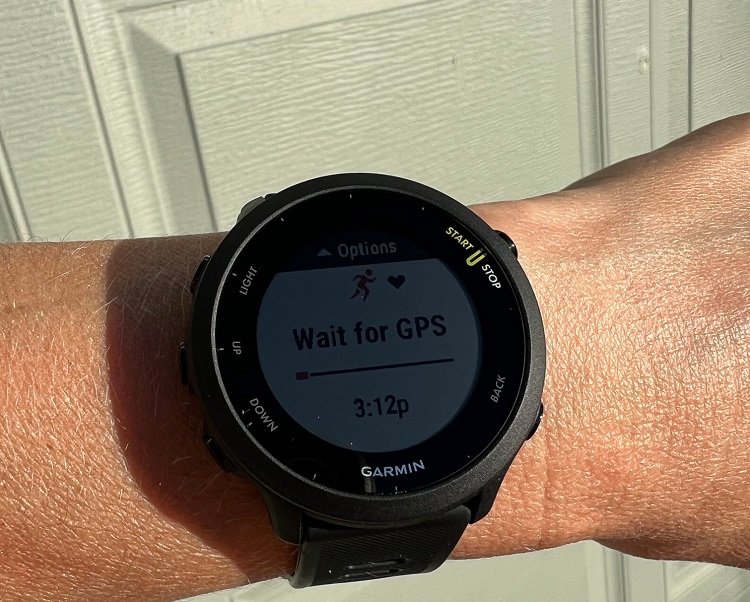
While the Forerunner 55 is packed with features, it looks and feels cheaper. Unlike the Fenix which comes in lovely white and rose gold, giving it a wear anytime look, the 55 feels almost plastic. It also does NOT include the ability to provide elevation, ascent, descent, mapping or a few other things you’ll see in a higher end model.
Quick Specs
- Battery life: smartwatch2 weeks, GPS only 20 hours
- Touchscreen: no
- Available in 3 colors
- Available from Garmin.com for $199
- Read our full Garmin 55 review here >>
Polar Pacer ($299)
This is now what’s considered an entry level running watch and it has EVERYTHING including smart watch features. No need to overspend to just get the basic data you need to run.
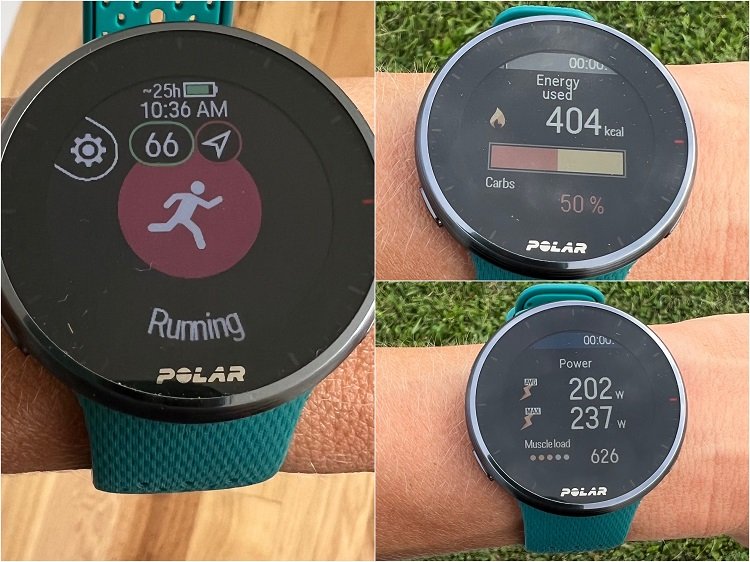
For $100 more you can get the Polar Pacer Pro. Check our full review of the Polar Pacer Pro here >>
Specs
- Touchscreen: no
- Battery Life: 6 days Smartwatch mode, 155 hours training mode
- No wrist mapping but you can follow a route and use back-to-start
- Available in 3 colors
- Check it out for $299
Mid-range Running Watches
Garmin 570 ($549)
Sure, it’s an advanced watch but what you’re basically getting is a watch that allows you to take phone calls, play golf and track really specific multisport activities.
The Garmin Forerunner 570 is a fantastic watch for athletes who are very active beyond running. Particularly those who golf as it has some very specific features or those who do mountaineering, skiing or team sports.
It’s probably one of the most design-appealing watches that Garmin currently has out there. We’ve been asked a lot about the watch whenever we post about it on Instagram because of it’s unique coloring.
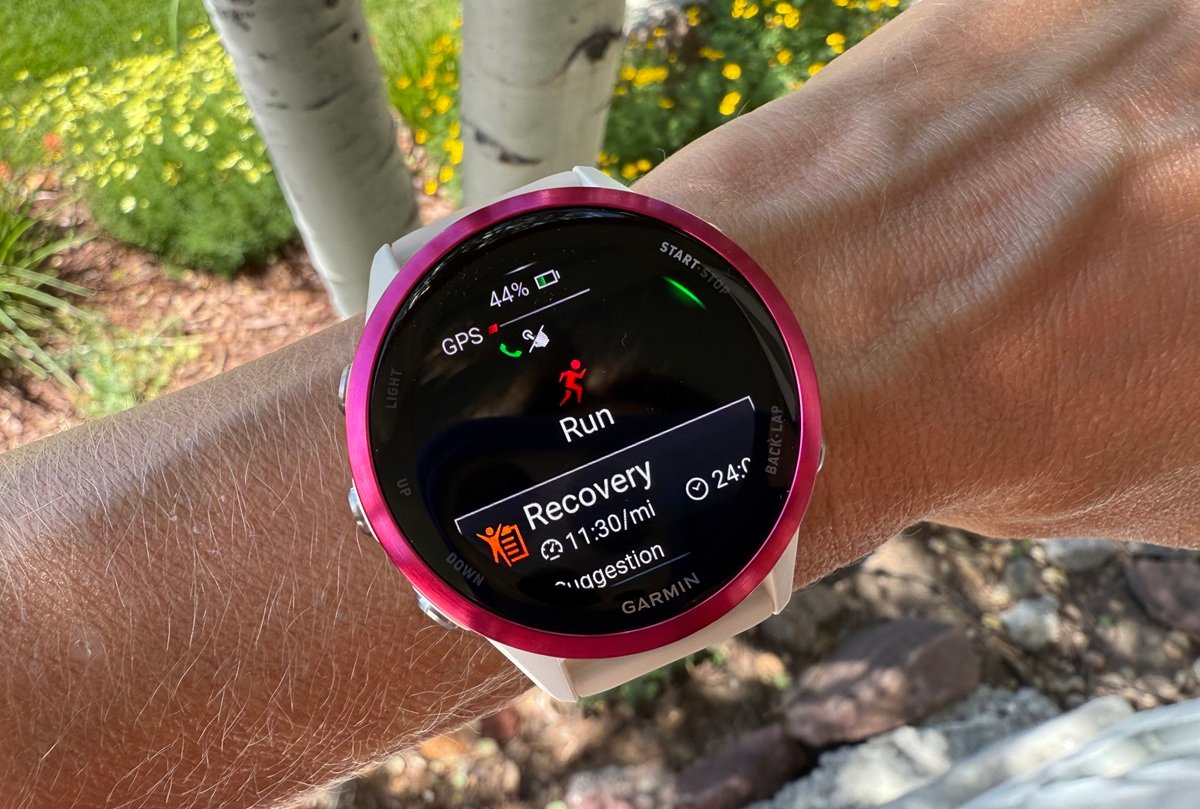
Garmin heard you loud and clear, on the face that a lot of you like your Apple watch is being able to take or answer a phone call. Well now, you can also call them right from your wrist kinda like Inspector Gadget.
Quick Specs
- Battery life: smartwatch 11 days, GPS only 18 hours
- Touchscreen: yes
- Available in 6 colors
- Available from Garmin.com for $549
- Read our full Garmin 570 review here>>
Polar Vantage M2 ($399)
The Polar Vantage M3 is packed with tons of features, from detailed training plans to recovery tracking to it’s sleek looking appearance, it’s not the most beginner-friendly running watch, but definitely great for multi-sport athletes.
This is the first Polar watch to have a biosensing technology that is capable of analyzing and translating biomarkers.
- Optical Heart Rate- new sensor reducing the interference that can occur during movement to provide more accurate HR readings
- Wrist-ECG- keeps track of the heart’s electrical activity and rhythm
- Sp02- useful for HIT or high altitude training
- Nightly Skin Temperature- looks at how your temperature fluctuates during sleep and compares it on a rolling 28-day average
All of these combined basically helps you to get a bigger picture of how to make the most out of your training.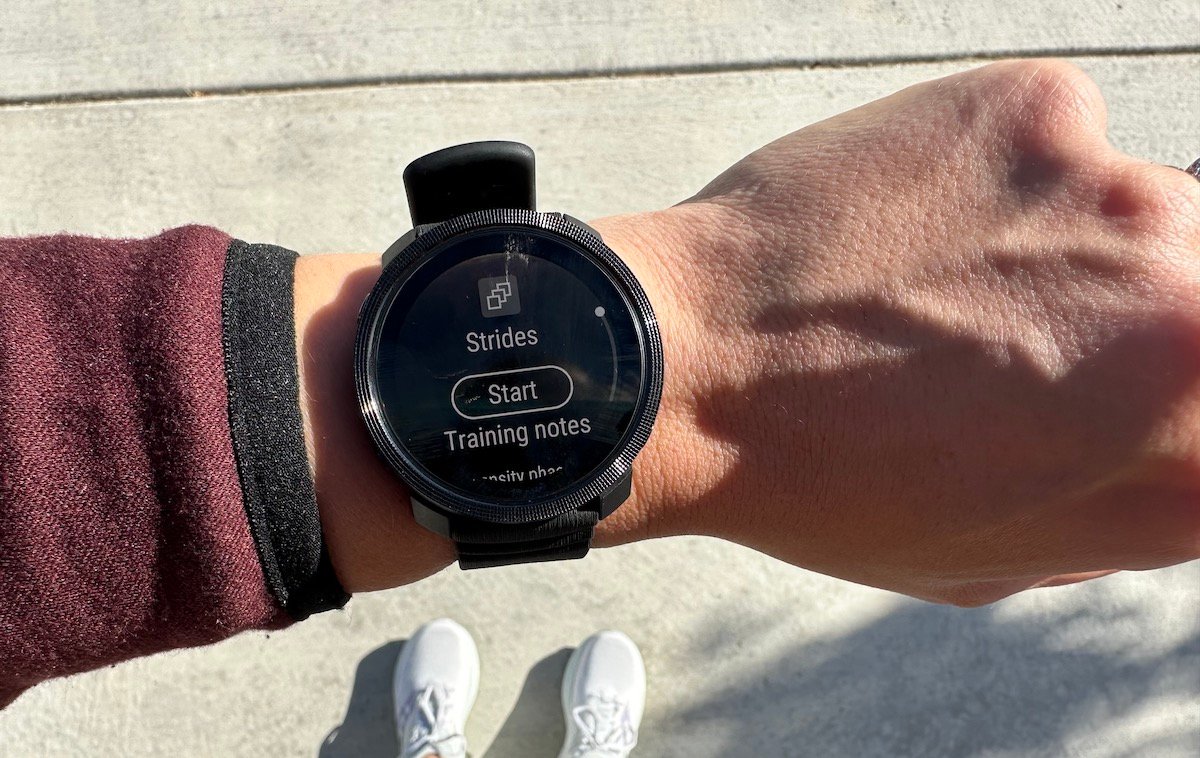
Quick Specs
- Touchscreen: Yes
- Battery life: 7 days Smartwatch mode, 30 hours Performance training mode, 70 hours Eco training mode
- No wrist mapping but you can follow a route and use back-to-start
- Available in 2 colors
- Find it now for $399
- Read our full review of the Polar Vantage M3 here >>
High End Watches
Garmin Enduro 3 ($899)
One of the few watches that immediately got our stamp of approval for HR accuracy! It’s a beast of a watch, in terms of size, but we’ll still wear it just about any time hitting the trails.
It became my go-to for our mountain hikes, snowshoeing, and cross-country ski days.Since battery life is one of the things that stands out, let’s look at that.
- Smartwatch up to 36 Days/90 days solar
- Standard GPS mode 120 hours/320 with solar
- Solar charging means that you get extra on all the battery life settings, like up to 320 hours of GPS!
- Expedition mode is designed for multi-day activities to help you get that extended battery life
- Maps for navigation are one of the features that used to set this watch apart, but you can now get even more brilliant colors and maps on the 965.
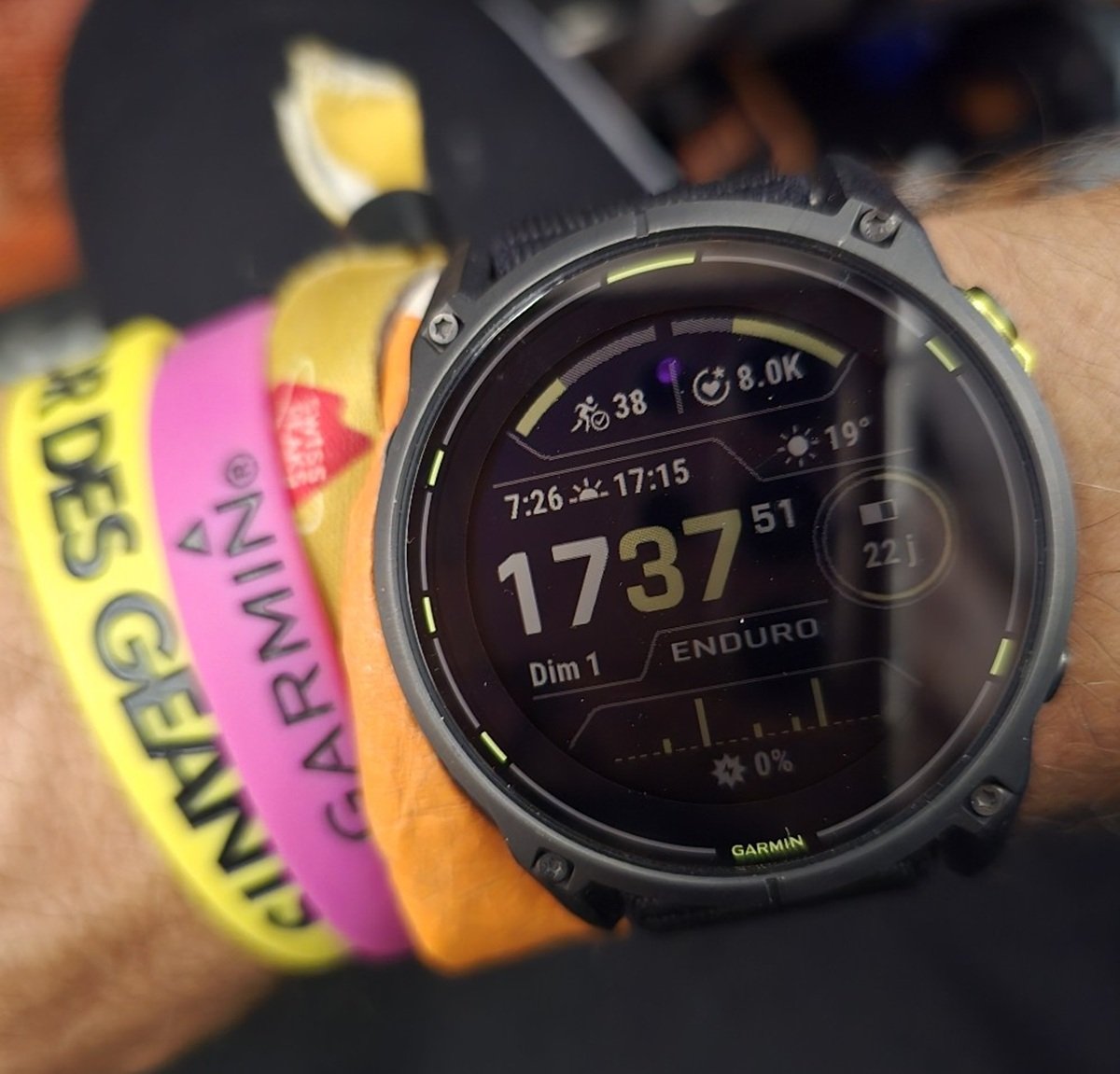
The Enduro 3 does have a brighter touchscreen, but it’s not the most colorful/brightest of the smartwatches; it still provides all your watch notifications. You can respond to texts from the watch if you have an Android.
Quick Specs
- Battery life: smartwatch 36 days/90 days with solar, Battery save 92 days/unlimited w solar, GPS only 120 hours/320 hours w solar, Expedition GPS 77 days/unlimited w solar
- Touchscreen: yes
- Available in 1 color
- Available from Garmin.com for $899
- Read our full Garmin Enduro review here >>
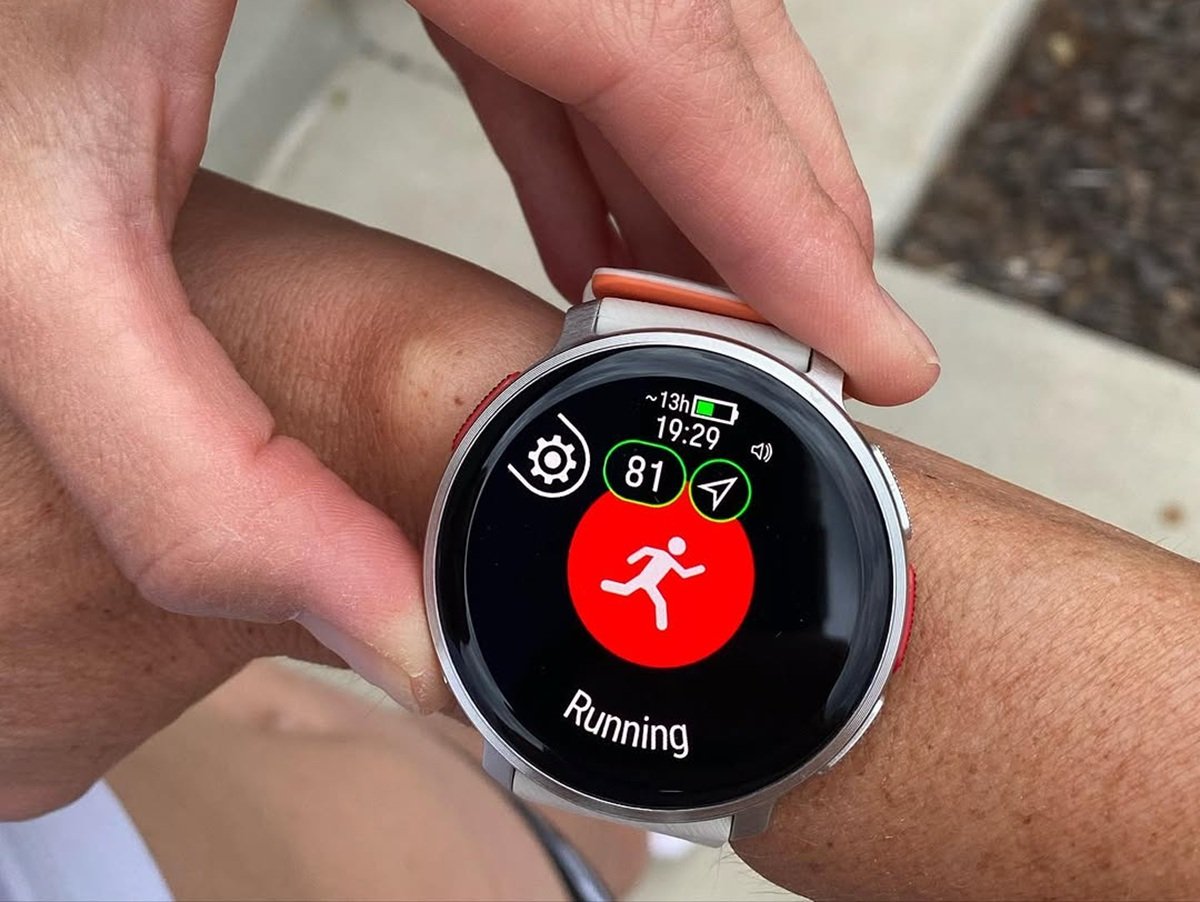
Polar Vantage V3 ($699)
The V3 is built for runners who want deep traiing and recovery insights without feeling lie you need to learn a whole new language to use the watch.
It features a shiny and bright AMOLED screen and has every piece of data that you could need right on your wrist.
The Vantage V3 is lightweight and like with other Polar watches pretty spot on HR data.
Quick Specs
- Touchscreen: yes
- Battery Life: 10 days Smartwach mode, 43 hours Performance training mode
- Wrist mapping with full color maps
- Available in 4 colors
- Check it out for $699
GPS Watch Feature Comparison
Even the most basic of GPS watches today include the same features such as heart rate monitor, pace, distance, calorie tracking, and lap function.
Where the two brands differ is in the hardware, training tools, alerts, and additional data recording features. Some watches go above and beyond what we often need, for those looking to nerd out on statistics.
One cool feature of Polar watches are the five minute fitness tests. These simple assessments determine your current aerobic fitness level and provide an estimated VO2 max.
Display and Tracking – Tie
Both Garmin and Polar watches display customizable real-time data, such as pace, time, distance run, calories burned, and heart rate, plus more if you desire.
Summary information like average pace, stride count, and elevation gain are all also available real-time by the push of a button.
The display on the Polar Vantage V is noticeably dimmer than that of Garmin watches. While still readable, it does require use of the backlight more often and is harder to read in bright light (as reported by some runners. Amanda used hers in bright sun and did not have this issue).
The biggest difference between the two brands in this arena comes in display customization.
The six screens on the Polar Vantage can be modified via the Polar app, but not to the same extent as Garmin models, The Garmin IQ app allows users to choose from a selection of widgets, including music and weather, depending on the model.
In terms of which watchmaker reigns in tracking, it’s a tie. Depending on the watch, both include a variety of sports modes and have superb GPS accuracy due to using multiple satellites.
GPS Watch Battery Life – Garmin
Aside from the Polar Vantage series, Garmin watches far exceed in battery life.
- in continuous training mode, the Vantage series lasts 30 and 40 hours, depending on the model
- the Garmin competitor can go for just 24 hours
However, the Garmin Fenix 6 and Forerunner 945 can switch to UltraTrac mode, which sacrifices GPS accuracy in exchange for a longer battery life, up to 60 hours.
UltraTrac mode is a battery saving feature that periodically shuts off GPS and uses the accelerometer to determine speed and distance.
Mapping and Navigation – Tie
For those running new routes or who have a tendency to get turned around during a run, the navigational features on Garmin watches will make sure you stay on course and return home safely.
If you don’t mind looking at a map on a tiny screen, the Garmin Fenix series includes color topographic mapping capabilities.
Heart Rate Monitoring – Polar
These days, most GPS watches come with either strap-based or wrist-based optical heart rate monitors. Optical monitors are known to provide inaccurate results due to recording random movements.
However, the Polar Vantage series has the only watches currently available on the market that use bio-impedance technology to override readings caused by movement.
- After a few months of testing the Polar, we’ve found it to be more accurate in cold weather and less issues with random spikes while running than the Garmin Fenix.
- However, the new Garmin Enduro was more accurate with only occasional spikes where it was likely showing cadence and not HR. A known issue called “cadence lock”.
Both brands track wellness-related data like sleep metrics and heart rate throughout the day.
The difference between the two brands is that all of the Polar watches include some variation of this feature, where Garmin has a few models that do not.
Since running with low heart rate training, we’ve come to understand the relevance of using a heart rate monitor to complement training. All of the Polar watches and the higher end watches in the Garmin lineup include wrist-based and/or optical heart rate monitoring.
For some tricks on getting more accurate heart rate readings check out my GPS watch tips.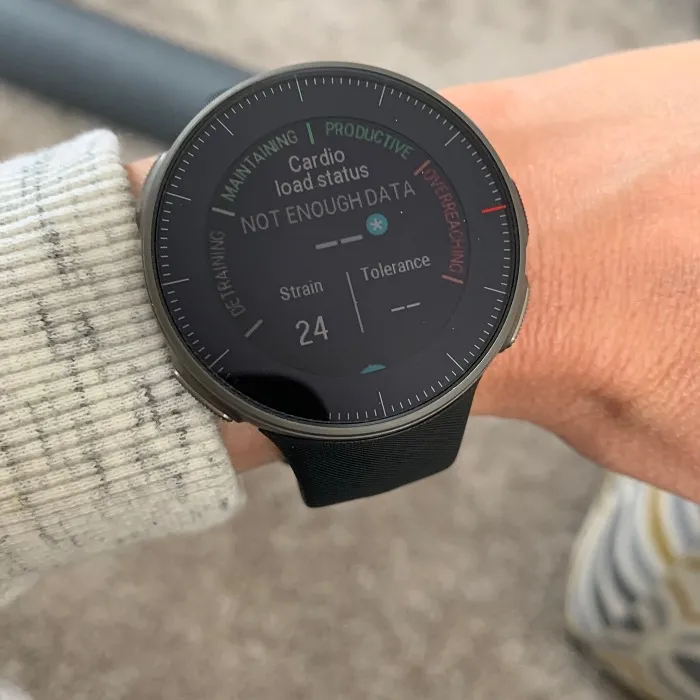
Data Management and Apps – Garmin
Polar uses the Polar Flow App to analyze post-workout summaries, highlighting heart rate, cadence, speed, and altitude on a map. Unlike Garmin, however, Polar watches don’t automatically sync training stats to the app.
You have to open the app and do it manually from your watch.
Perhaps the most innovative and useful app feature of Polar watches is the ability to create a personalized training plan.
Once you set your race date and distance, the app will generate a training plan, populating a calendar with workouts. During your run, alarms will sound to indicate whether you are staying within your target heart rate.
Garmin uses a program called Connect that includes similar analytical features as Polar Flow, and users love the additional capabilities like the ability to create workouts, build courses, and challenge friends to competitions.
If you’re switching between brands, then an app like Strava is probably the best place to keep all of your data safely in one place.
BONUS: If you’ve ever wondered how accurate the Training Status is on a GPS watch, checkout this article for the full scoop.
How to Choose the Best GPS Watch for Running
Both Garmin and Polar make great, high quality GPS watches. You can’t go wrong with either brand.
Picking the right watch for you is a matter of preference for features like the display, various tracking modes and activities, and the app used to sync the data from your watch.
Each brand makes a variety of watch models to suit different budgets and needs.
To help decide on the right watch for you, ask yourself the following:
- Do you just want a basic watch that will track your training and races?
- Do you want a multi-sport watch that will manage cross training?
- Or, do you want a do-it-all watch that keeps track of your every moment, 24/7?
- Are you running ultra marathons in the mountains or road marathons?
- How important is battery life?
Buying Tip: If you already have a watch and are just looking to upgrade, stick with the brand you have and know.
Unless there’s a feature you really dislike, then there’s no reason to learn a new interface. Think of it like switching from an Apple to a PC.
Try to check out the watches at your local running or outdoor store to tinker with the displays and see how they feel on your wrist.
Are they something you could wear all day long to track all the data?
Are they too heavy or is the face too big for your small wrists? Play around with the different apps beforehand to see which interface you like.
What to read next?
- GPS Watch Mistakes most runners make
- Best HR monitors (from watches to straps)
- Running With an Apple Watch: Perfect for Some Runners, Terrible for Others
The post Polar Vs Garmin | Comparing Top Models appeared first on RunToTheFinish.