Half Marathon Training Plan for Beginners

Thinking about signing up for a half-marathon, but not sure how much time you actually need to train? Is it 16 weeks? 24 weeks? A full year?
Let’s take a closer look at what a beginner half-marathon training plan should include so you can feel strong, prepared, and ready when you step on that start line.

You will in no way be surprised to hear that I’m going to say there are a number of factors that determine how long half-marathon training takes for each runner. I’m going to try to break down some of those common things today and give you guidance on where to start and what to do from there.
One of the things I take into account is running history.
Those newer to running should allow more time to build up to the half-marathon distance. This is because the muscles, tendons, ligaments and joints need time to adapt to the impact of running.
Many times, we can make big gains in our aerobic fitness quickly, but that doesn’t mean the body is fully adapted.
Half-marathon training schedules are about both the physical and mental adaptations required.
Let’s look at everything you need to know for a half-marathon beginner training plan.
Half Marathon Training Plans
The most common training plans on the Internet or in running books are 12-16 weeks long. The amount of time that you need for training could fall squarely in that very normal range, or you might need less or more time.
Most half-marathon training plans assume a few things:
- Current baseline of fitness that allows you to complete 10-15 miles per week
- At least three months of consistently running a few days a week without injuries
- Understanding your current availability to put in the required mileage
Everyone is different, which is why there are so many training plans and why coaches help develop custom schedules.
16 weeks of training is roughly 4 months, which provides sufficient time to increase your mileage steadily without any big jumps. This is often referred to as the 10% rule of training, which helps to prevent injuries.
While you will be doing pieces of strength, intensity, and volume building throughout training, you could think of it as being broken down into these segments. Where each uses the previous weeks of training to move you closer to your goal.

How Long Should a Beginner Train for a Half Marathon?
Everyone is different in their goals, how their body feels and the way they want to approach race day. If you’re setting a big race goal for yourself then taking the time to really build a base, work on speed and nutrition is going to pay off massively!
A lot of elite runners focus on shorter distances for quite some time before jumping up to the half and full marathons. It works.
- If you’ve been running consistently for a year, checkout a 12-week half-marathon training plan
- If you’ve got a race time goal in mind, checkout a 16-week half-marathon training plan
- Starting from scratch? Consider spending 6 months focusing on shorter distances like the 5 and 10k to build fitness and endurance.
A too short training period creates risk of injury (which means no race!)
Periodized Half Marathon Training Plan
A good training plan follows a periodized model of training. This takes you from the least specific work to the most specific, so that you are slowly building the appropriate fitness for your half-marathon goal.
Getting used to this for 13.1 miles will make it feel all the more familiar when (or if) you decide to jump up to 26.2. I know you’re saying never…but we all said that!
Here’s a breakdown of the focus for each portion of training for a 16-week plan.
Weeks 1-4: Base
The first few weeks of the plans are when we will build on the base that you already have coming into training. We know that you’re super excited to get started but it’s important to ease into things so that you don’t do too much too soon and burnout.
For the beginner plan, the focus will start out with a few easier speed workouts focusing on strides.
It’s important to take baby steps with practicing your goal pace so that each workout feels more and more achievable.
Remember, your goal can be anything from setting a specific finish time to pacing with negative splits and as simple as just crossing the finish line.
Every fourth week you’ll see a scheduled down week. And you might wonder, why scale back when I’m feeling good? But these weeks are there for a reason to help your body absorb training, recover, and start the next week feeling fresh.
As tempting as it might be, don’t skip them, and definitely resist the urge to add extra workouts.
Weeks 5-8: Strength
This is where we will start to introduce workouts that may feel a little intimidating at first, especially if structured speed is new to you.
Speed workouts are meant to feel challenging. If you’re breezing through them, you may want to consider modifying the paces and your effort.
Each workout is going to build on the next, so you’ll be able to look back and see how much stronger you’ve gotten.
You’ll start to see regular speed workouts now but the type and intensity is going to vary on the type of plan.
For beginners, you’re going to still see strides, hill workouts and some fartleks.
This is basically just some speed play to get your body used to changing between harder and easier efforts.

Weeks 9-12: Volume + Specificity
At this point, you are starting to hit some of your longest runs. For new runners, that means entering double-digit long runs. You’ll be adding more workouts with race-pace miles while maintaining strength-training workouts and volume.
This is when you really start to see progress in your training. Dialing your gear for longer distances and working on nailing your long run fueling plan, from the right energy gels to hydration. Understanding how your stomach reacts.
While half marathons don’t require the same level of mental toughness as a marathon, 13.1 miles is still no joke! So this is a good time to really start practicing how you’ll handle low moments in the race, working on your running mantras, and making sure your training matches your goal.
Weeks 13-14: Peak
This final section provides a couple of weeks of very race-specific training, which could mean final long runs of 10-12 miles for newer runners. Or it could be a long run with 1/2 at marathon pace, or progression to faster than half-marathon pace for experienced runners.
Peak week will be your highest weekly mileage and most difficult long run.
Remember that you do not need to cover 13.1 miles in training!
Then you will transition into the final two weeks of the plan, which are the taper.
Weeks 15-16: Taper and Race Week
Tapering is NOT optional; it’s part of training. You’ll need to get out of your head about the reduced mileage, so learn how to do half marathon taper the right way.
While you’ll have an overall reduction in miles, having a little bit of speed helps to prevent from getting stale legs and also the taper crazies at bay!
Taper means going in to the race with fresh legs. That, plus the adrenaline, gives you an incredible boost.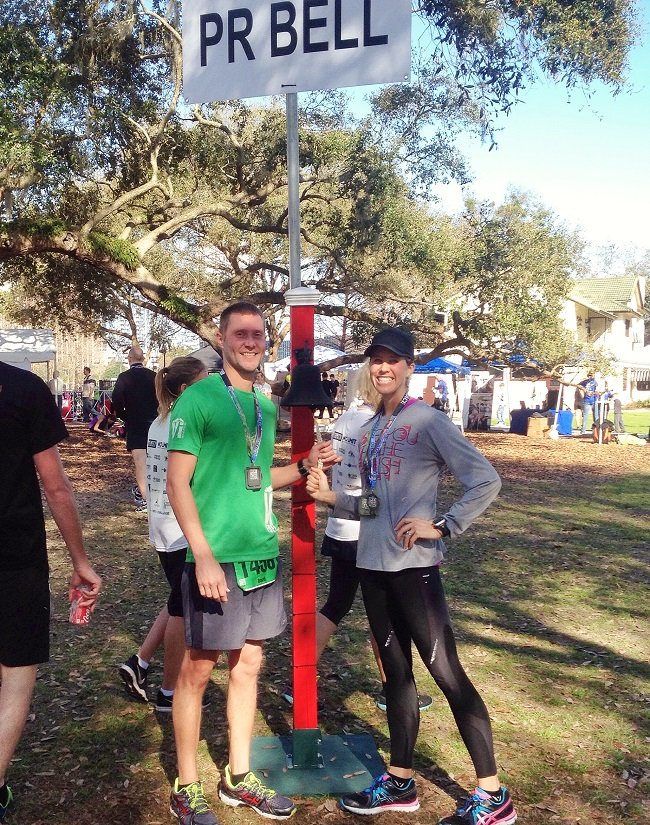
What happens if you don’t give yourself enough time to train for a half marathon?
It’s not uncommon to have runners reach out for coaching when they realize their half marathon is just 3 months away and they haven’t been running at all.
Sometimes we will agree to work with them, but others, I will honestly tell them I don’t feel we’d be doing them a service to try and force the race.
- Potential for injury during training and the race increases dramatically
- Frustration from not being able to complete the assigned workouts is high
- Disappointment with how race day goes leads to no longer running
Whew, that was a lot of information, but I hope you now have a better answer for how long it takes to train for a half-marathon!
Looking for what to read next?
The post Half Marathon Training Plan for Beginners appeared first on RunToTheFinish.