Best Running Shoes for Ankle Support, Chosen by Runners and Physical Therapists
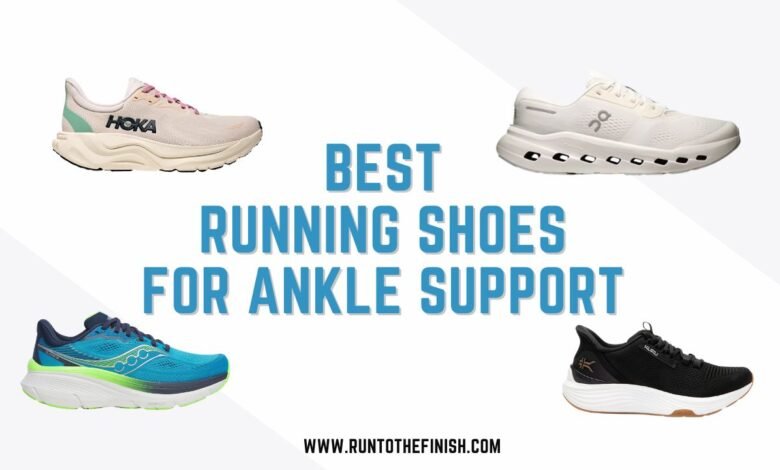
Not all runners require the same level of ankle support in running shoes. For individuals with specific biomechanical needs or a history of ankle-related issues, the right pair can be a game-changer. We’ll look at some of the best models and ensure it’s what you need for support.
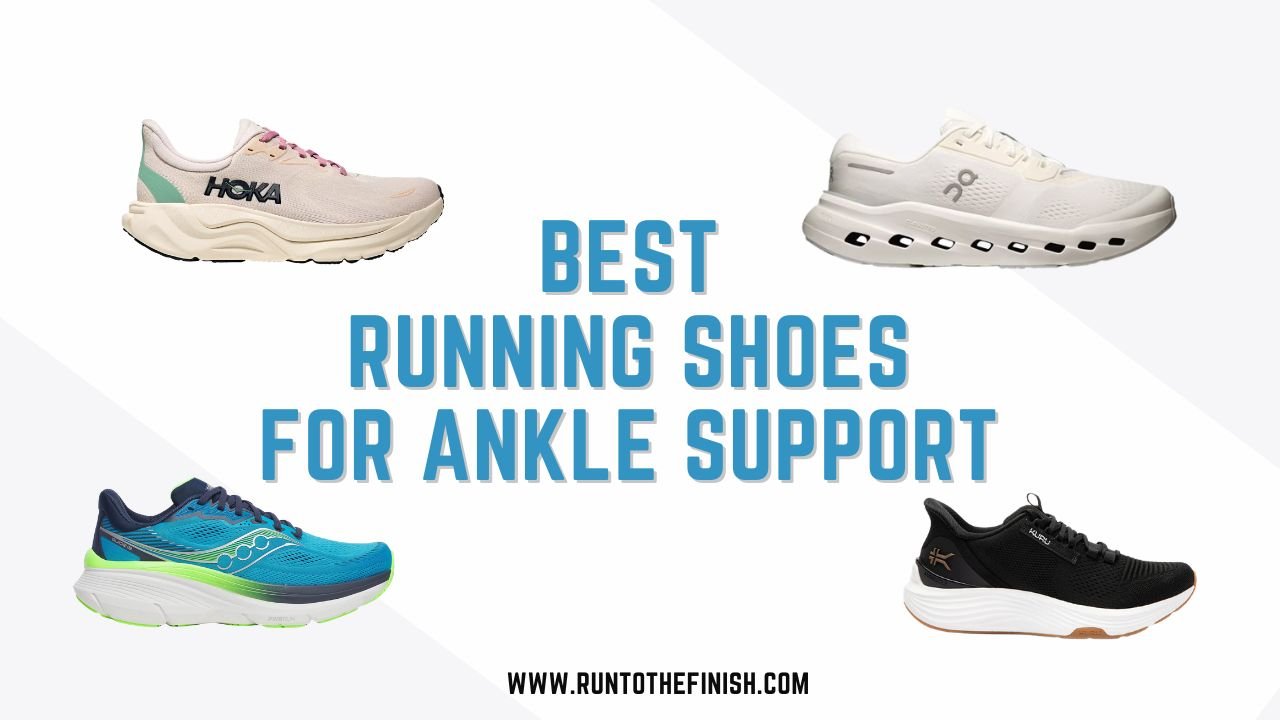
The ankles, often likened to the foundation of a house, play a pivotal role in maintaining stability and balance during the repetitive motion of running. This is where the significance of ankle support running shoes comes into play.
In this article, we will look at our top running shoes for ankle support. Whether you’re a long-distance enthusiast, an occasional jogger, or even someone seeking to regain their stride after an ankle-related setback, understanding who might benefit from ankle support running shoes is the first step.
9 Best Shoes for Ankle Support
For those seeking an extra layer of security and stability, we present a curated selection of the seven best running shoes that will provide exceptional ankle support.
Best For Road Running – Hoka Arahi 8
The Hoka Arahi 8 is stable, comfortable, and cushioned – everything you expect and love from Hoka while still offering your flat feet comfort and support.
Hoka moved from J-Frame to H-Frame stability technology, which added support not only on the medial side, but on the lateral side as well. This keeps the shoe solidly under your entire foot, which is great news for overpronators.
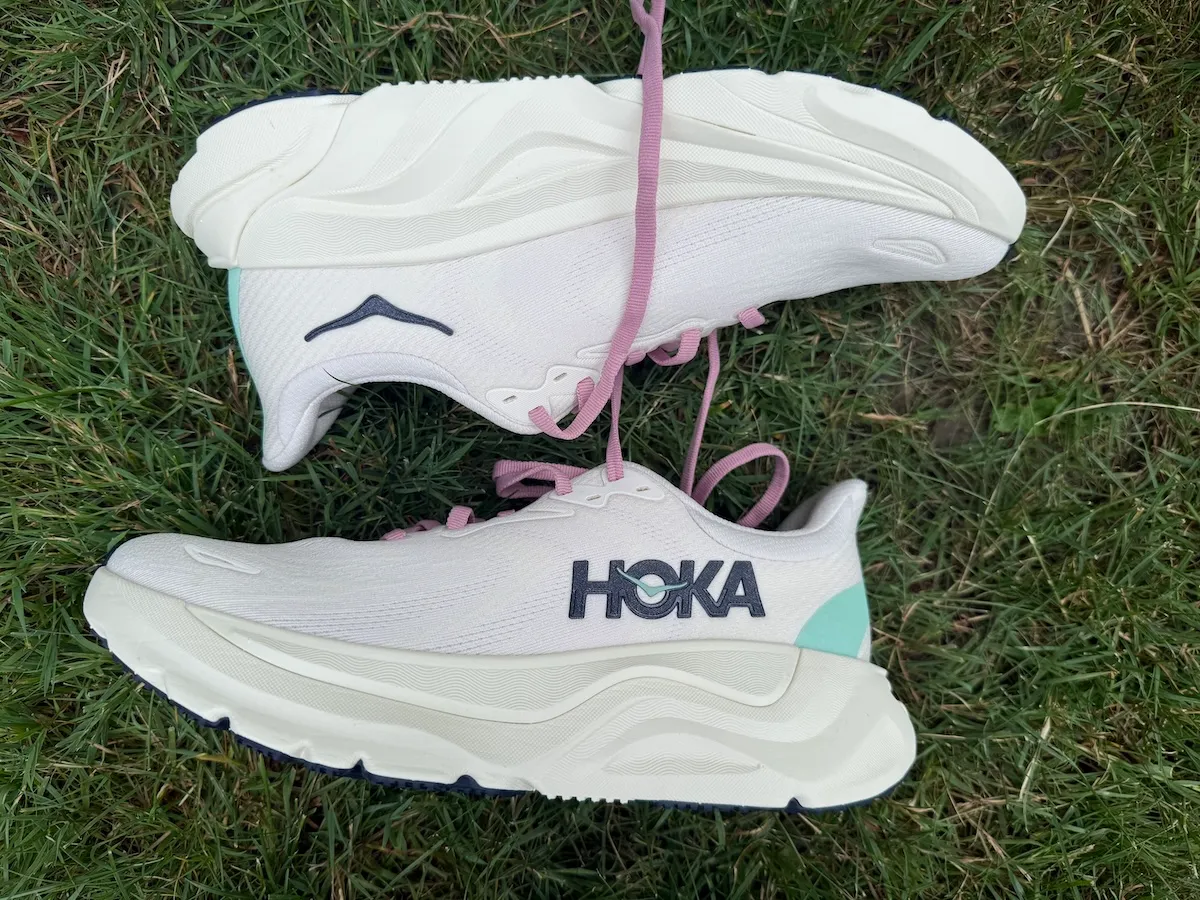
The Arahi 8 features dual-density compression-molded EVA foam that they claim offers “structured support without the bulk.”
In short, these are supportive and corrective without really feeling like an orthopedic shoe.
- Weight: 9.8 oz Men’s, 7.7 oz Women’s
- Stack Height: 39 mm Men’s, 37 mm
- Heel Drop: 8 mm
- Available in six colors
- Available in wide and extra wide
- Available on hoka.com for $150.00
- Check out our full review of the Hoka Arahi 8.
Best Moderate Cushion – Nike Structure 26
The Structure has just enough cushion to feel it and light enough stability that you won’t overpronate without it feeling forced. If you’re a neutral runner, you may really notice it, but for folks who need a good stability shoe, this is a winner.
Nike has shifted away from rigid posts and instead uses its Midfoot Support System, which wraps the foot in two areas: the lateral rear heel and the medial midfoot. This delivers guidance and stability without ever feeling overbearing. 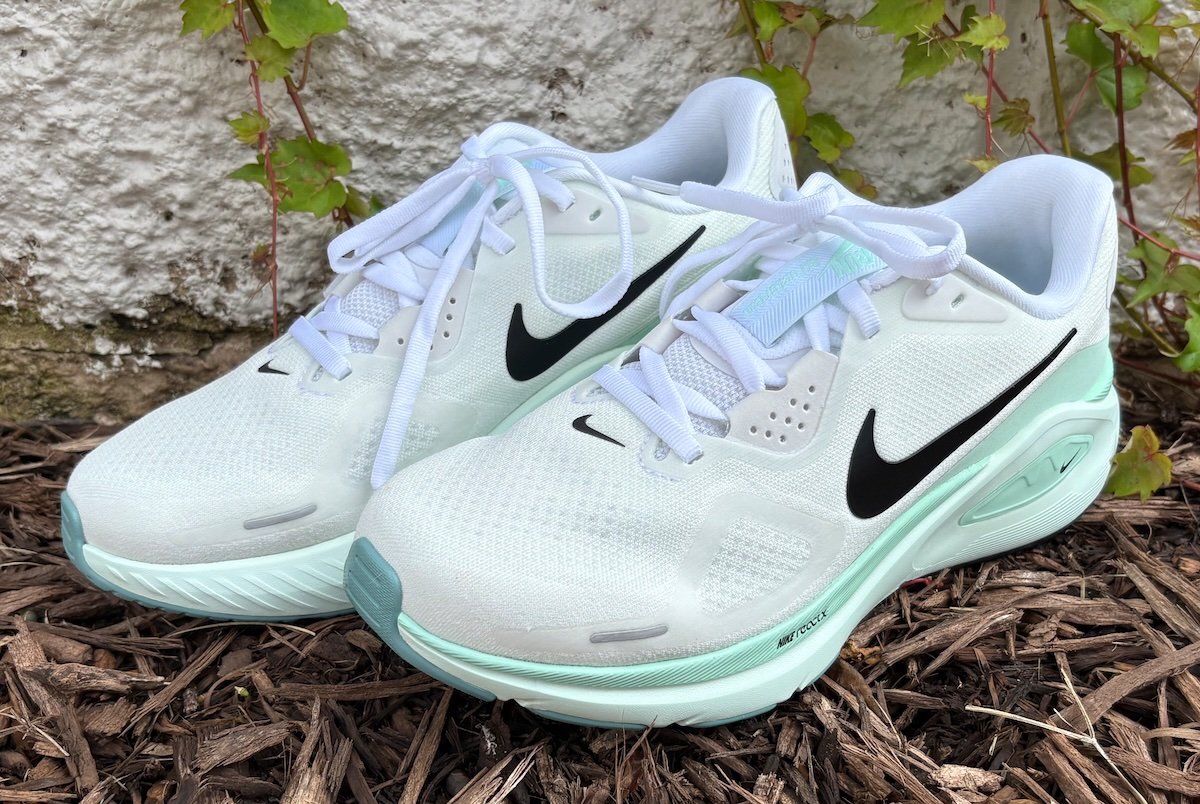
And you’ll appreciate that support, because the Structure 26 carries its highest stack height to date—38 mm in the heel with a 10mm drop.
This won’t be a stability shoe for faster runs, but certainly has the right feel for longer miles, and with a 10mm drop could be helpful for those with less ankle mobility.
- Weight: 11.3 oz Men’s, 9.2 oz Women’s
- Stack Height: 38mm
- Heel Drop: 10 mm
- Available in 6 Colors
- Available in wide
- Available on nike.com for $145
- Read our full review of the Nike Structure 26 here >>
Best for Narrow Feet – Brooks Adrenaline GTS 25
The “GTS” in Brooks Adrenaline GTS stands for “Go-To Shoe.” It’s a nod to the fact that the Adrenaline GTS has become a go-to shoe for many runners who prioritize stability, support, and comfort in their running shoes. It’s simply gotten lighter and less rigid over the years!
It has a nice, solid structure with flexibility, offering support for people with high arches, but can also be a solid option for flat feet with a special insert. Its GuideRails support system helps your foot move more naturally in each step.
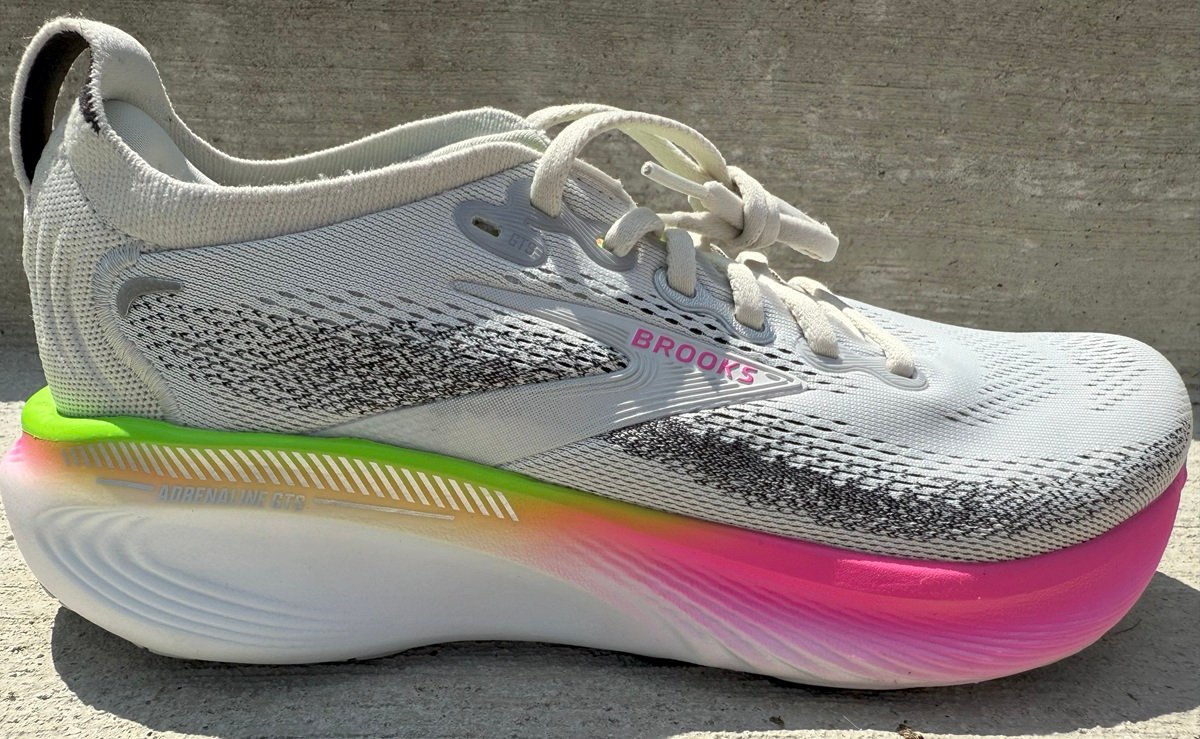
It’s great for everyday runs or those long runs on the weekends. Middle of the pack folks who need stability, might find they do great for even the half marathon race day.
- Weight: 10.6 oz Men’s, 9.5 oz Women’s
- Stack Height: 37 mm
- Heel Drop: 10 mm
- Available in 9 colors
- Available in wide, extra wide, narrow, medium
- Available on Brooks Running for $155.00
- Read our full review of the Brooks Adrenaline GTS 25 here >>
Best for Run/Walk Intervals – On Cloudrunner 3
This shoe is great for the runner who needs some support but doesn’t want a shoe stacked with cushion. It has a firmer feel and the stability features are focused in the rearfoot in the shoe, which might not be for every runner.
The overall comfort of this shoe did set it apart from other stability shoes I have worn, with the mesh and upper being breathable but also secure. The firm Helion foam midsole, heel collar, and sidewalls make this shoe feel stable and controlled.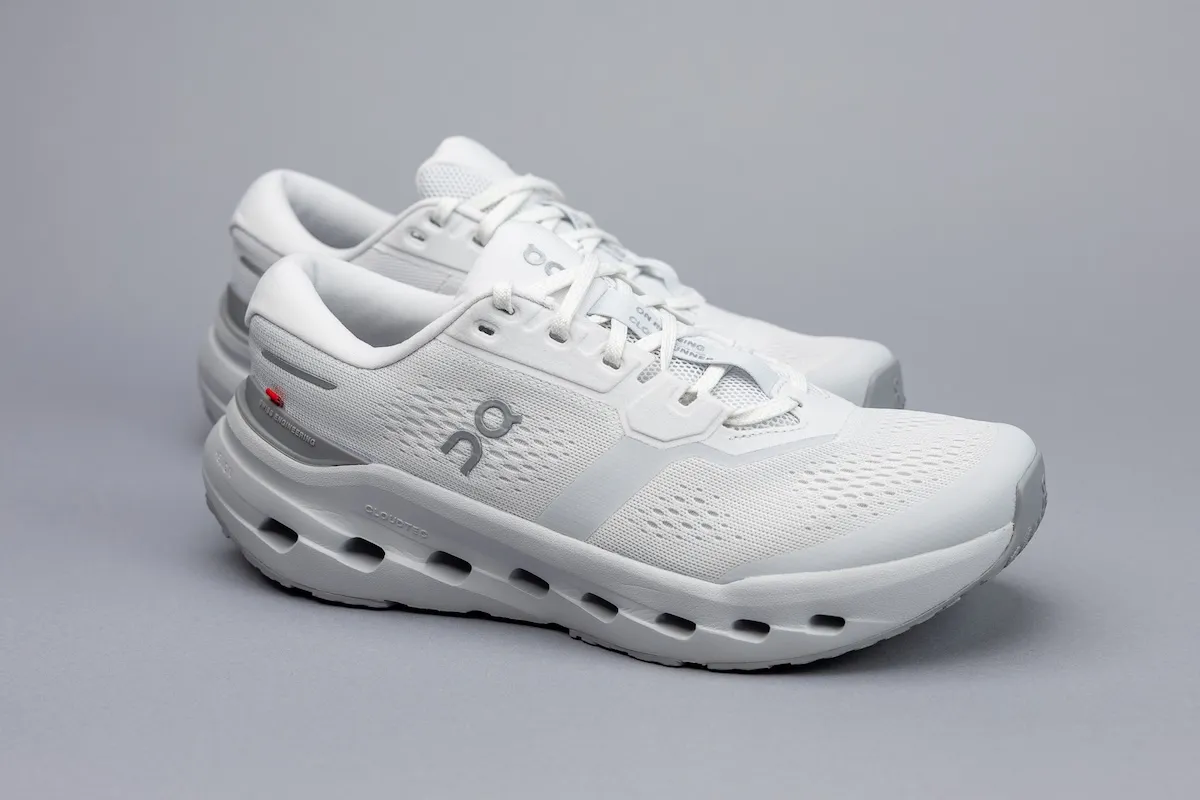 The drop in the On Cloudrunner 3 goes down from 10mm down to 8mm, which previous users will want to be aware of if you’re transitioning into the newer model.
- Weight:10.9 oz Men’s, 8.8 oz Women’s
- Heel Drop: 8 mm
- 6 colors available in Men’s, 5 colors available in Women’s
- Available in wide
- Available at On.com for $160.00
- Read our full review of the On Cloudrunner 3 here >>
Best For Flat Feet – Saucony Guide 19
The Saucony Guide is a stability running shoe that is designed for runners who need more support and guidance. It features a medial post, which is a firmer foam that helps to prevent overpronation and provides stability.
That being said, it’s not HUGELY structured. Compared to older stability shoes, this isn’t going to be super firm or provide massive support. It’s just providing a little bit of extra for those who find their arches dropping or have flat feet.
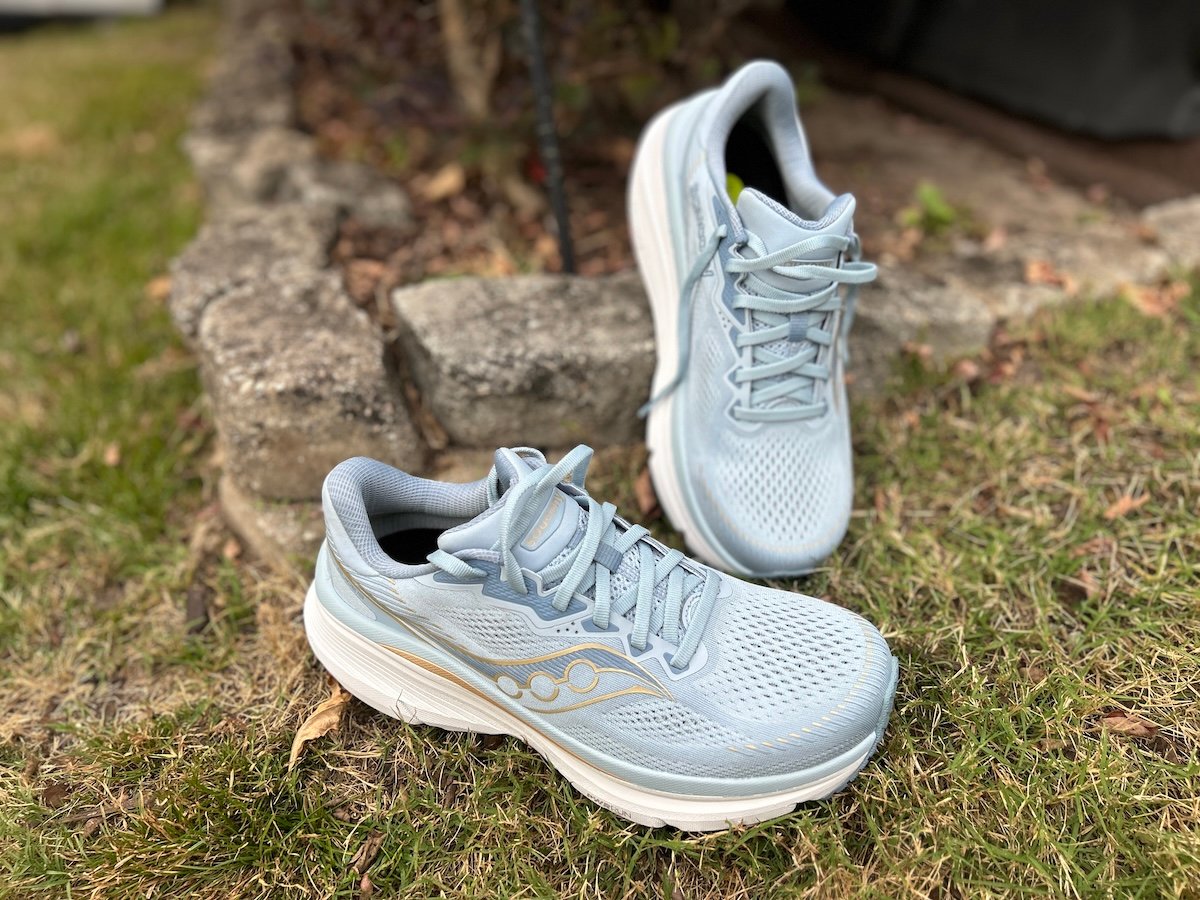 The major downside to this stability shoe is one that plagues so many, weight. It’s a basic looking shoe, with a great comfortable feel, but it’s not the easiest for picking up the pace. Definitely look to these as your easy run shoe.
Part of the weight in this model is more rubber coverage on the outsole, which is improving durability.
Not sure whether to pick the Saucony Ride or Guide…you know we got you covered.
- Weight: 9.7 oz Men’s, 8.9 oz Women’s
- Stack Height: 35mm
- Heel Drop: 6 mm
- Available in 8 Colors
- Available in wide and extra wide
- Available from Saucony.com for $150
- Read our full review of the Saucony Guide 19 here >>
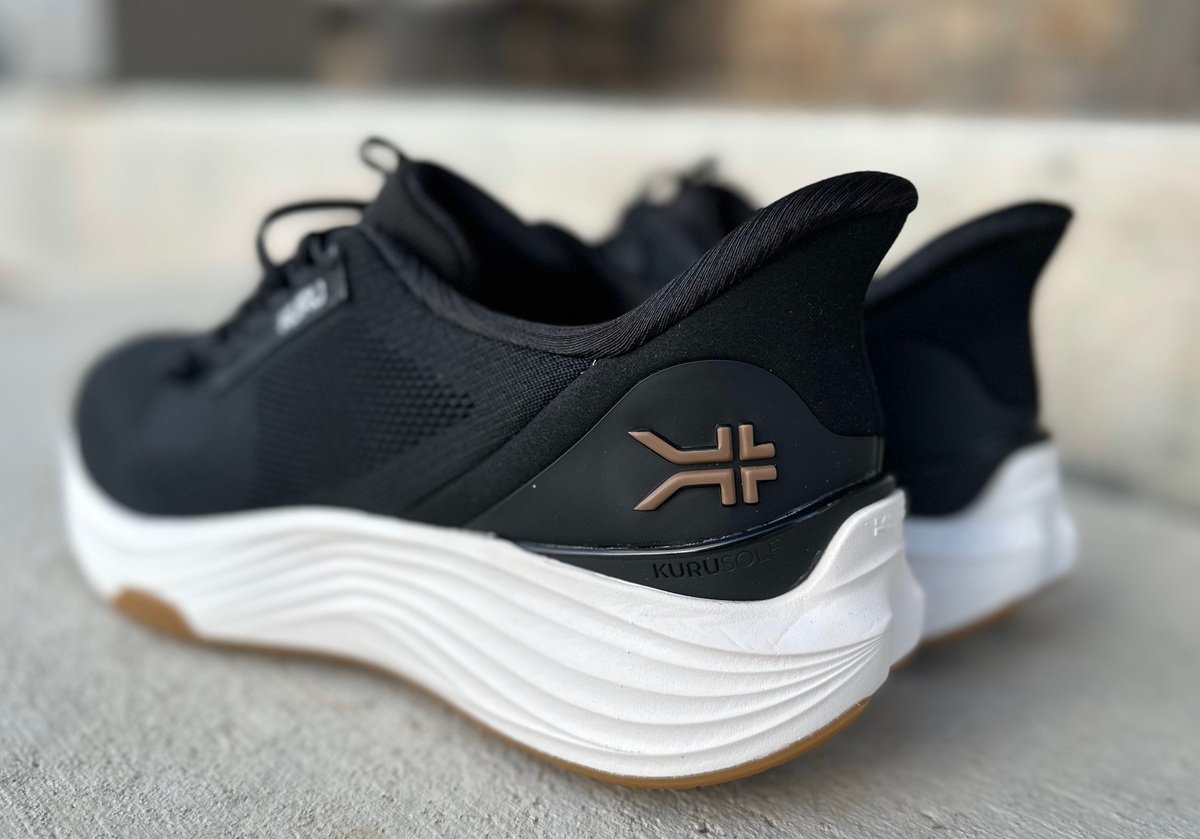
Best for All Day Wear – Kuru Atom 2
Kuru shoes are designed with a heel-hugging KURUSOLE. If you’re someone who spends a lot of time on their feet and deals with plantar fasciitis, this shoe was designed specifically for you!
Once you put the shoe on, the curved, heel-cupping design will give your heel pad a little extra support and form to your foot. They are meant to follow your foots natural biomechanics and sorta mold to your needs.
The foam uses the EVA shock absorbing cushion, so there is going to have a more plush, bouncy feel. Perfect for those super long days on your feet!
- Weight: 13.1 oz Men’s, 11.4 oz Women’s
- Heel drop: 10 mm
- Stack height: 28 mm
- Availalbe in 4 colors
- Available in wide
- Available from kurufootwear.com for $165
- Check out our full review of the KURU Atom 2 here >>
Best Zero Drop Option – Altra Paradigm 8
The Paradigm is great for the runner who needs stability, loves a roomy toebox, but doesn’t want a max plush shoe.
With just enough cushion without sacrificing the much-needed support, you’ll feel enough pep in your step without this shoe feeling clunky or stiff.
Although this is Altra’s max cushion shoe, it did not feel super plush like some of the other brands on the market. It provided enough support throughout the shoe, in part thanks to the toebox design that allows your toes to splay out and bring some natural stability.
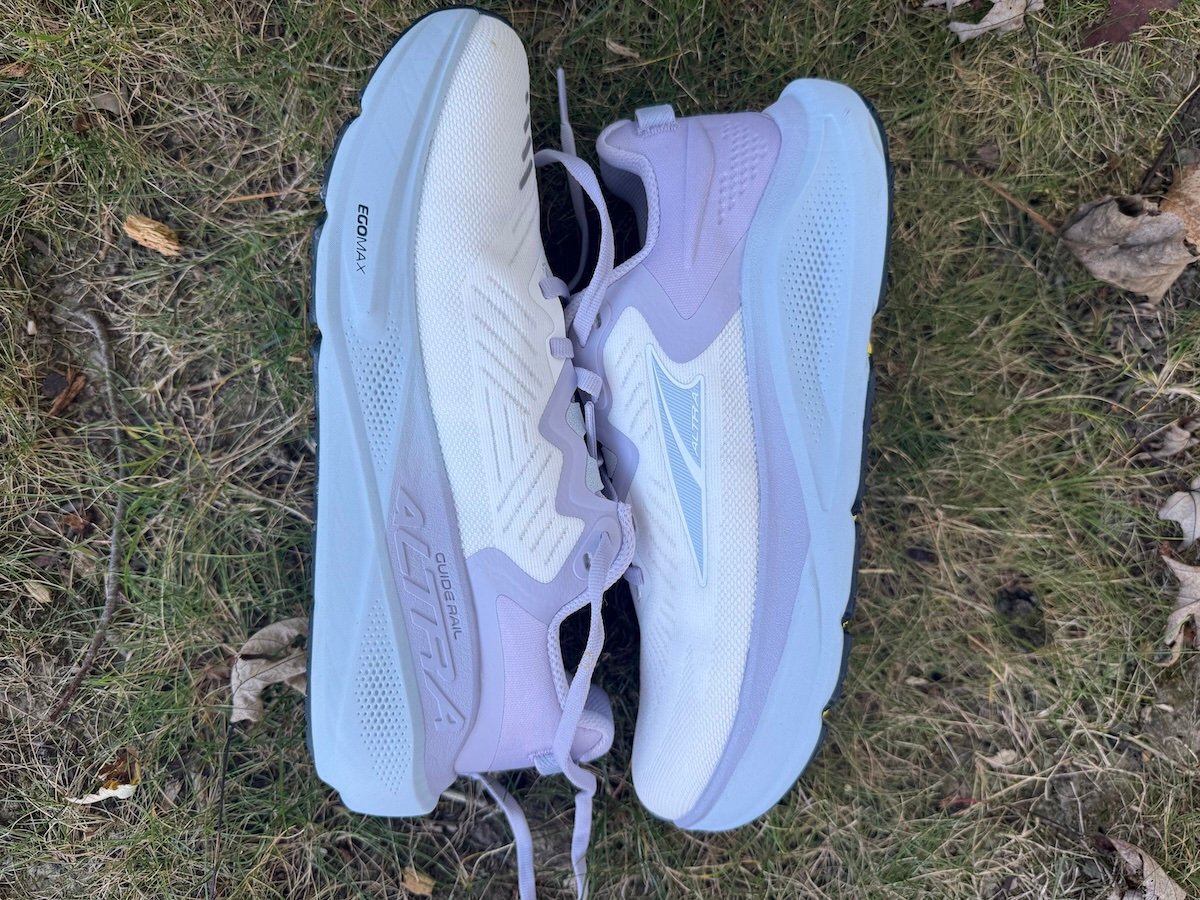 With the GuideRail technology, these shoes provide the support we’d expect out of a stability shoe by encouraging natural foot placement. Altra paired this technology with their signature FootShape fit, giving the support and stability we look for from running shoes.
- Weight: 10.9 oz Men’s, 8.6 oz Women’s
- Stack Height: 30 mm
- Heel Drop: 0 mm
- 5 Colors Men’s, 6 colors Women’s
- Not available in wide
- Available on altrarunning.com for $160
- Read our full review of the Altra Paradigm 8 here >>
Best For Trail Running – Hoka Speedgoat 6
Trail running can be exciting and adventurous, but it can be scary if you’re worried about rolling an ankle 5 miles into your 10-mile out and back. Finding trail-running shoes that have your back (and your feet!) is important.
It’s not a stability shoe. Instead, the heel base seems wider and they’ve refined the heel collar to hold you better in place.
Each time my foot rolled through a rocky section I could tell there was less dipping of my heel than in the 6. It was a glorious feeling and I already know my ankles are going to be much happier. I’d say anyone with Achilles issues will also appreciate it.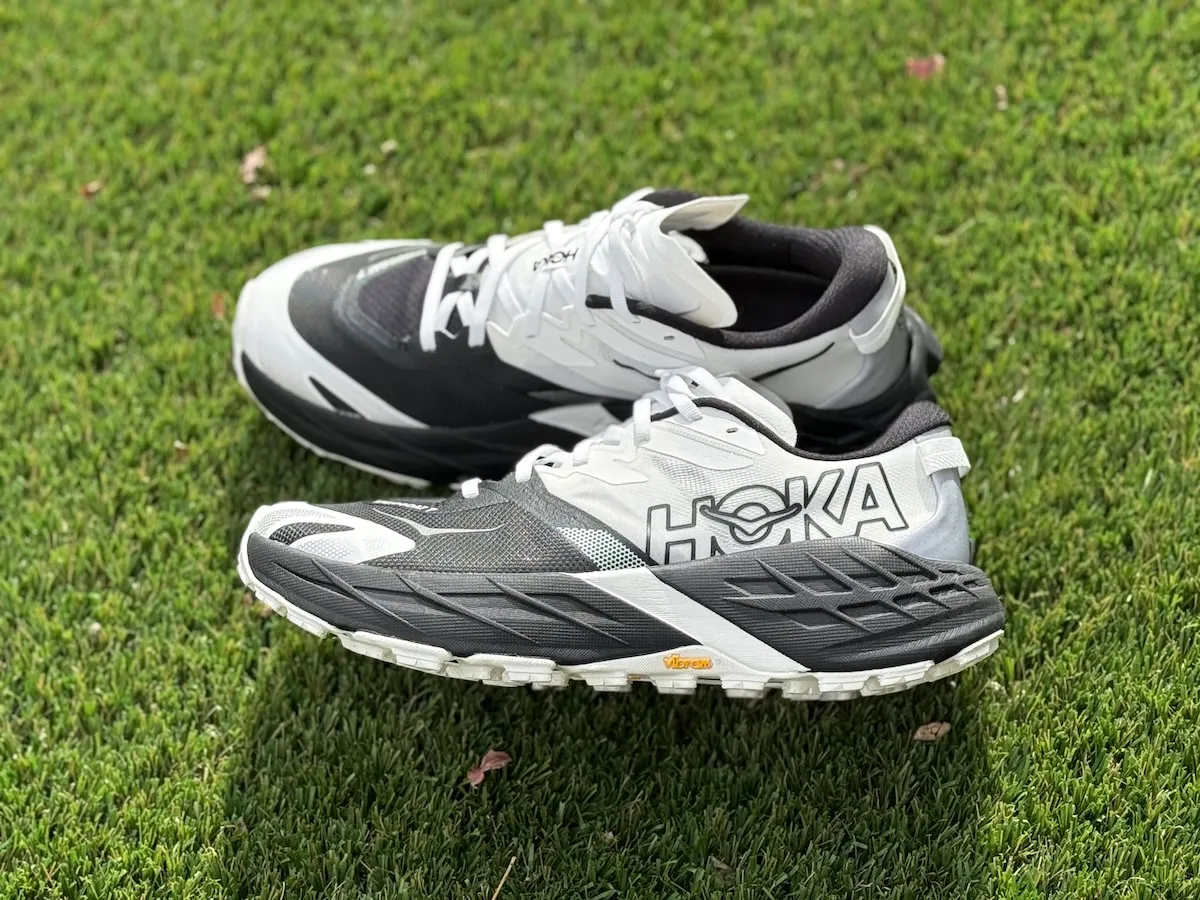
The new foam is a little softer, it feels like there’s a bit more in the forefoot which is really comfortable. The shoe remains light, able to pick up the pace, but with even more energy return from this superior foam. It’s not bouncy like a super foam, it’s not crazy plush, it’s just a really perfect amount of foam for a trail shoe!
- Weight: 8.3 oz women’s, 9.7 oz men’s
- Stack Height: 38mm women’s, 40m men’s
- Heel Drop: 5mm
- Available in GTX
- Available in 3 colors to start
- Available in wide in some colors
- Available at: Hoka.com for $165
- Read our review of the Hoka Speedgoat 7 here >>
Best For Technical Trails – Salomon Ultra Glide 4
We did put the S/Lab version through ALL the technical terrain and mud, having the same outsole, we feel very confident in the technical trail capabilities.
The Ultra Glide 4 seems to have the support and cushion, while also not feeling as big and bulky.
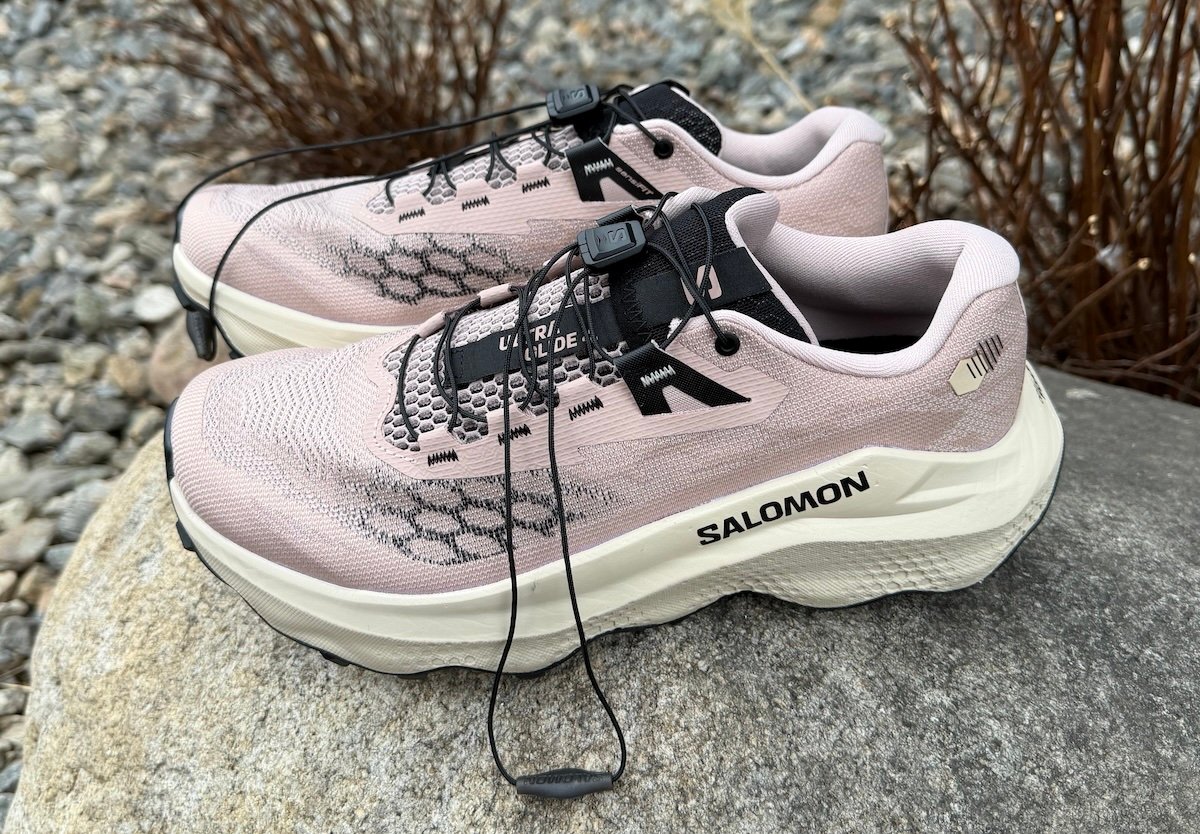
- Weight: 9 oz women’s, 10 oz men’s
- Heel Drop: 6mm
- Available in 3 colors
- Not available in wide
- Available on Salomon.com for $160
- Read our full review of the Salomon Ultra Glide 4 here >>
Assessing Your Need for Ankle Support Running Shoes
Before diving into the world of ankle support running shoes, it’s essential to evaluate whether these specialized shoes are the right fit for your unique running needs.
While ankle support can be beneficial for many runners, it’s not a one-size-fits-all solution. And you know I’m always going to stay, please make sure you are starting with things like ankle strength training exercises!
History of Ankle Sprains
The National Institute of Health: National Library of Medicine states that ankle sprains remain the most common injury in athletes. Additionally, the study mentions that if you have experienced an ankle sprain in the past, you are 75% more likely to develop chronic ankle instability (CAI) if you do not correct the problem.
Basically what CAI means is, if you don’t seek treatment or start using ankle support, rolling your ankles becomes more common leading to further injuries, leaving you benched on race day.
Biomechanical Issues
If you tend to overpronate (inward rolling of the foot) or underpronate (outward rolling), it can affect ankle stability. Look for shoes that offer appropriate arch support and motion control to align your ankles and reduce strain.
Body Weight
Heavier runners might experience greater impact forces on their ankles. Adequate ankle support can help distribute these forces more evenly and reduce strain.
Your ankle joint is made up of 3 separate bones: your tibia, fibula, and the talus which is right between the shin bones and your heel bone. Ensuring proper care for this joint will help you avoid foot and ankle pain while on the run.
Uneven Terrain
If you frequently run on trails or uneven surfaces, your ankles are subjected to greater stress. Ankle support running shoes can provide the stability needed to navigate such terrain safely.
Look, it may not seem like a big deal when you are not experiencing pain, but the fact is, the fit and comfort of your shoes don’t begin and end with cushion and breathable fabrics. So let’s dig a little deeper and find out what you need to look for in an ankle-supportive running shoe.
What To Look For in an Ankle Supportive Shoe
Everyone has their preferred running shoe brand (and some of us are die-hard fans who do not want to deviate from what we know). One of the most ankle-supportive types of shoes is the high-top shoes, but sadly these less often come with breathable mesh uppers and get too hot.
High tops are great for basketball, but not ideal for running. We don’t want to over limit your movement. If you need more support, definitely checkout our top ankle braces for running.
Are there running shoes that provide ankle support?
While they will not be as stable as the mentioned high-tops or wearing an ankle brace, yes.
There are running shoes designed to provide better ankle support. These shoes are equipped with features and technologies aimed at stabilizing and protecting the ankles during running.
Do Stability Shoes Help Ankle Pain?
The short answer is: yes. By helping to prevent excessive motion, it can help to avoid new injuries or inflaming old injuries. Keeping your ankles stable and supported is a way to be proactive about possible injuries instead of reactive after they happen.
Additionally, ankle supporting shoes will usually have these characteristics:
- Sufficient arch support: That’s right, the bottoms of your feet matter to the health of your ankles. With flat feet often comes excessive pronation causing your ankles to roll inward leading to an imbalanced weight distribution and stabilization issues. A podiatrist can help you figure out your arch type so you know exactly what to look for.
- Enhanced Midsole Support: These shoes often have a reinforced midsole structure that aids in stabilizing the foot and ankle, reducing the risk of overpronation or supination.
- The right fit: You know how important it is to get fitted for the right running shoes, but it may be even more important than you thought. Shoes that are too tight or too loose can put strain and pressure on different areas of your foot, causing stress and inflammation to your ankles.
- The right amount of cushion: You don’t want the bottoms of your feet to be uncomfortable while you run, but too much cushion could cause you just as many problems. Finding the sweet spot between stability and cushion, rigidity and movement, is a balancing act.
- Know your strike: Are you a heel or midfoot striker? Some shoes are designed for maximum shock absorption depending on where your strike falls.
- Test the heel cup: If you want to feel more secure, stick with a deep heel cup. However, this is not always necessary as many shoes have improved their stabilizing technology to keep your foot in place.
An important reminder, that your old shoes might be the source of your pain. Once you have pounded away on the asphalt or trails, the stability of your shoes starts to take a turn for the worse, leading you down the path of potential injury. According to the Advanced Foot and Ankle Center in Utah, runners should replace their shoes every 350-500 miles or every 6-12 months (whichever comes first).
All right hopefully this list of stability running shoes to provide ankle support gave you some good ideas on where to start looking. Remember that comfort is king when it comes to the right shoe for you.
Looking for what to read next?
The post Best Running Shoes for Ankle Support, Chosen by Runners and Physical Therapists appeared first on RunToTheFinish.