Olympic Skimo Gold: Skyrunner Oriol Cardona Takes Men’s Sprint Win
The post Olympic Skimo Gold: Skyrunner Oriol Cardona Takes Men’s Sprint Win appeared first on iRunFar.
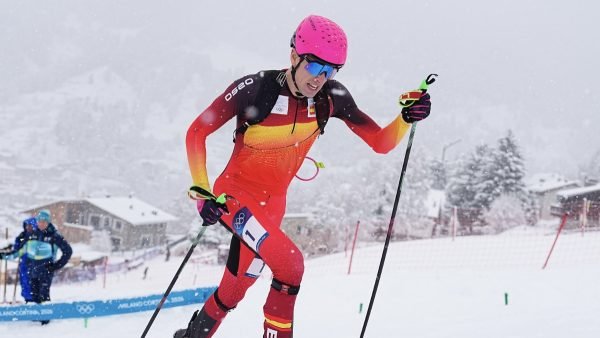
Spanish ski mountaineer and skyrunner Oriol Cardona won gold in the 2026 Olympic Games Ski Mountaineering Men’s Sprint, making history in the sport’s Olympic debut. The event took place on Thursday, February 19, on a snowy, cloudy afternoon in Bormio, Italy.
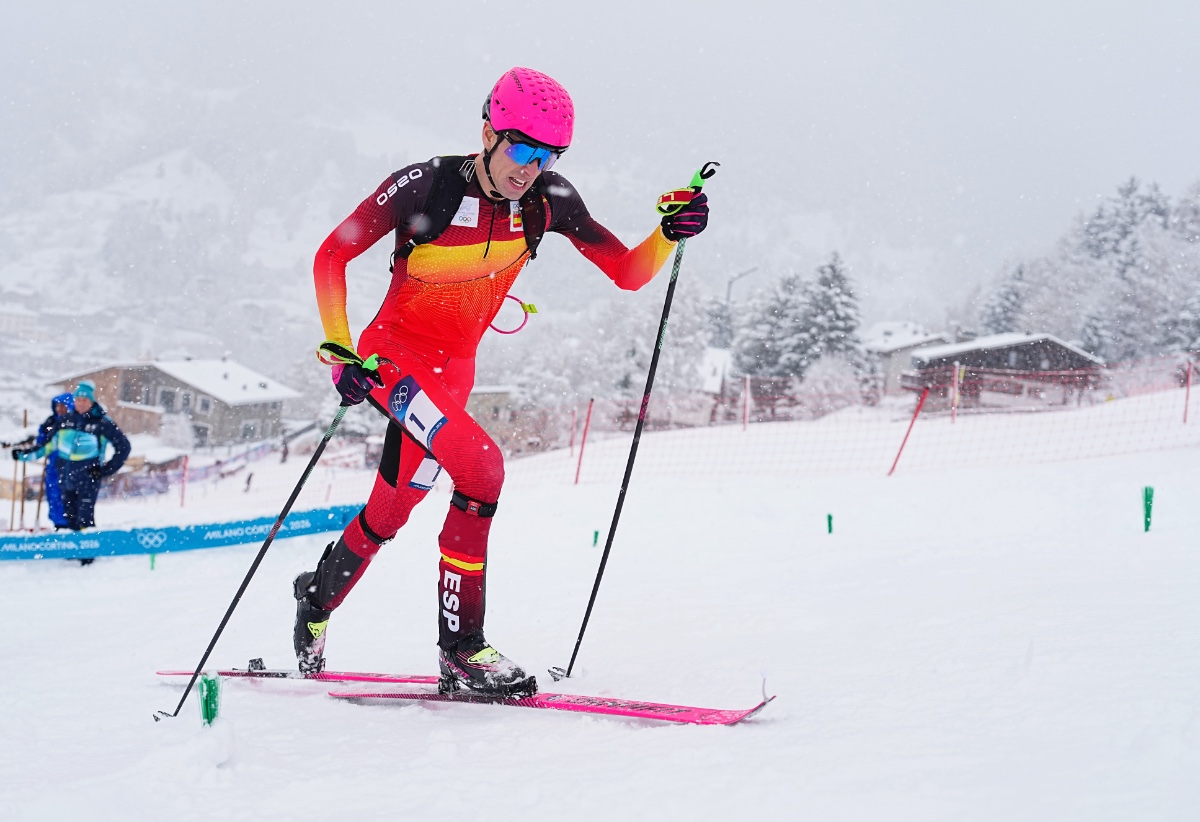
Cardona, who has trail running results such as a sixth-place finish at the 2019 Zegama Marathon, has focused more on ski mountaineering (skimo) than trail running since 2022. He is considered one of the strongest skimo athletes in the sprint distance, and, aside from a small bobble in the semi-finals, was dominant from the preliminary round to the finals. He won the final well clear of the rest of the field in 2:34.03.
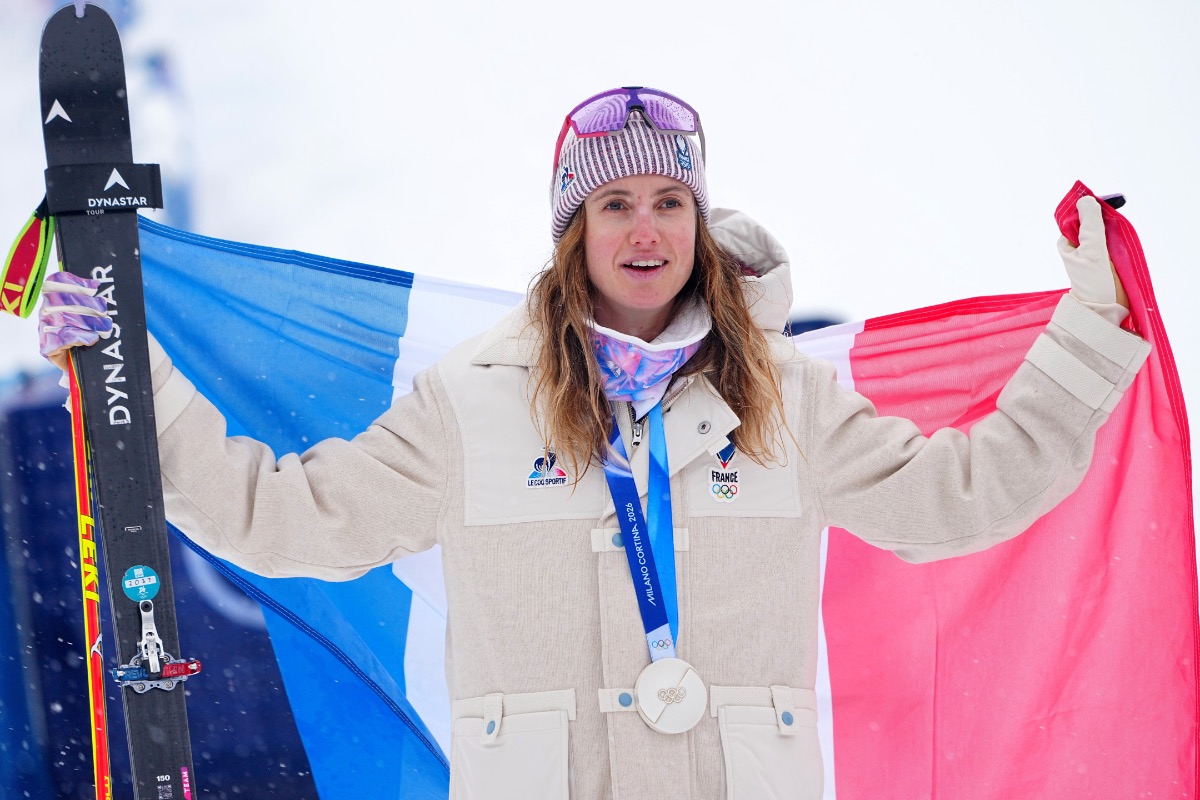
Emily Harrop of France, who has also done some skyrunning and won the 2021 Tignes Trail, and is a six-time skimo world champion, won silver in the 2026 Olympic Games Ski Mountaineering Women’s Sprint race behind Marianne Fatton of Switzerland.
Trail runners Cam Smith and Anna Gibson, representing Team USA, both made it to the semi-final round.
With the sport’s debut at the Olympic Games, skiers hailed from a variety of athletic backgrounds. In this article, we discuss off-road runners racing in Olympic skimo.
Challenging Race Conditions
Skimo, which — at its very basic description — involves running uphill on skis and then skiing back down, and rewards incredible uphill speed and the ability to ski quickly downhill on very skinny, lightweight skis. Skiers use skins, which provide grip, on the bottom of their skis to climb, then take them off to ski downhill. There were three rounds of action: a preliminary heat, semi-finals, and the final.
The Olympic sprint course took men about 2.5 minutes and women about 3 minutes. It was comprised of two segments of uphill skiing broken up with a bootpack — where racers put their skis on their backs and ran up a set of stairs. Once at the top, they ripped the skins off their skis and raced back down the mountain. The three transitions between uphill skiing, bootpacking, uphill skiing, and downhill skiing take about six seconds each, and they often decide the race’s outcome. The whole thing is fast and furious.
During the semi-final and final heats on Thursday afternoon, racers faced falling snow at the Stelvio Ski Centre high in the Italian Alps. The snow and cloud resulted in lower visibility, flat light, and tricky skiing conditions. The snow, which was heavier earlier in the afternoon, accumulated only a little between the men’s and women’s semi-final heats and the finals, held less than an hour apart. The conditions made transitions between the different segments of the race more difficult as snow found its way into the intricate moving parts of the ski bindings.
On Thursday morning, 16 racers squared off in three preliminary heats, where the top three advanced to the semi-finals, as well as the next three fastest times. Cardona won his initial heat in 2:42.40, the fastest time of the morning. Harrop set the fastest women’s time at 3:03.34.
In the afternoon semi-finals, Harrop led her heat from the start, the falling snow seeming to give her no difficulty. In the final, Harrop led at the top of the bootpack but was slow in the transition back onto skis and gave up the lead to Fatton, who held on for gold. Harrop finished second.
In the men’s semi-final, Cardona led at the top of the first uphill ski, but was also slow in the transition after the bootpack, and he placed second in his heat behind Switzerland’s Jon Kistler. In the final, there were no bobbles. While initially Cardona appeared stuck behind the leading Swiss duo of Kistler and Arno Lietha, he took the lead into the first transition zone and never looked back. Several racers tripped on the bootpack section, while Cardona stayed smooth throughout — with fast transitions. In the end, he had plenty of time to celebrate his win as he approached the finish line back at the bottom of the mountain.
Trail Runners on Snow
This is skimo’s debut at the Olympics, and we know of at least five trail runners taking part — Cardona, Harrop, Smith, Gibson, and Lara Hamilton (Australia).
Cardona found quick success when he traded trail shoes for skimo boots. In 2022, he won the men’s sprint race at the 2022 International Ski Mountaineering Federation (ISMF) European Championships. He won the men’s sprint at the ISMF World Championships in 2023 and 2025, the latter securing Spain’s spot in the Olympics skimo event. Cardona also won gold at the 2024 ISMF European Championships in the mixed relay, which he raced with Ana Alonso, who won bronze in the Olympic women’s sprint today.
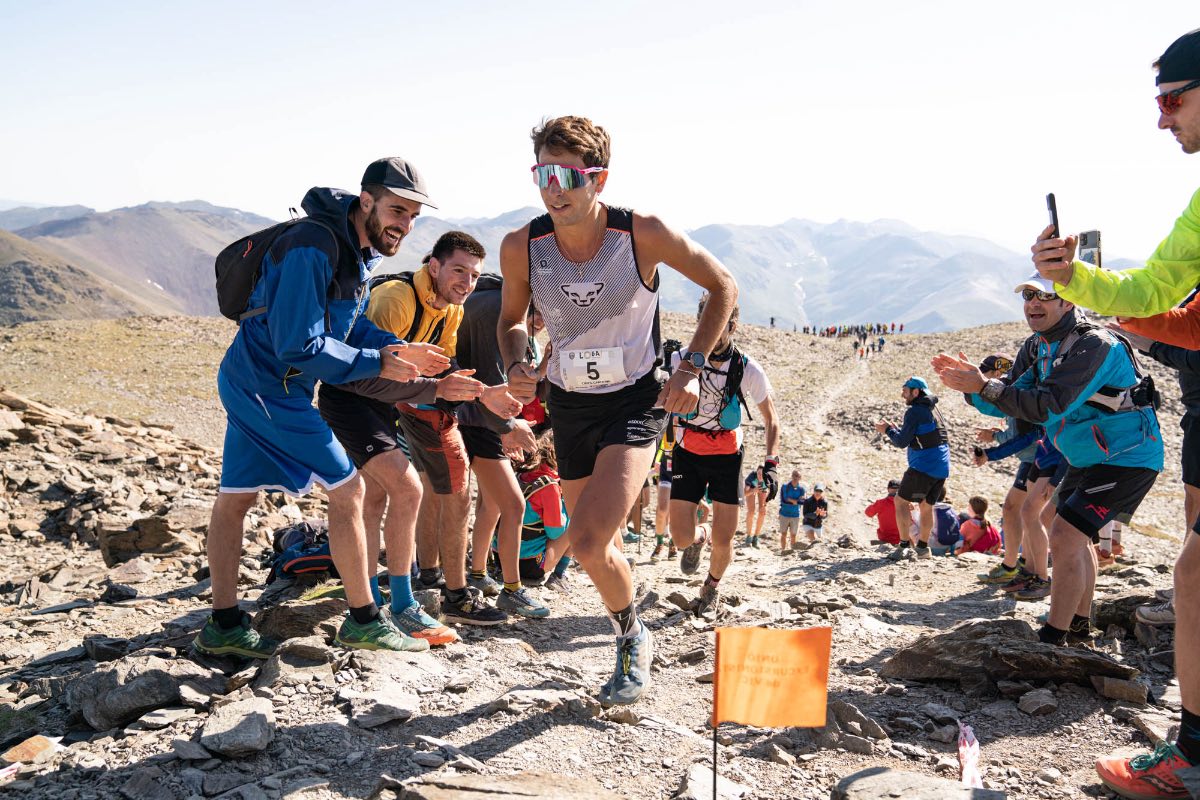
Before switching to snow, Cardona was a successful skyrunner. In 2020, he was sixth in two races at the Golden Trail World Series Championships. In 2019, he was second at the LimoneExtreme Skyrace, third at the Ultra Pirineu Sky race, as well as sixth at the Zegama Marathon.
Harrop has raced less on trails than the others, but her top result is probably a fifth place at the 2021 La Skyrhune race. She has been dominant in ISMF World Cup and World Championships for a half decade, with three world championships wins to her name in 2023 and 2025.
Mixed Relay Coming Up Next
The sprint race was the first of two skimo events at the Olympics, with the mixed relay coming up on Saturday, February 21. Gibson and Smith are hoping to medal in the slightly longer event. In their first time racing a mixed relay together, they won the 2025 ISMF Solitude World Cup race in Utah in December. The win qualified the pair to compete for Team USA at the Olympics. On Saturday, they will race alongside Cardona and Alonso, as well as Harrop and her partner, Thibault Anselmet, who won bronze in the Olympic men’s sprint.

Olympic Skimo Gold: Skyrunner Oriol Cardona Takes Men’s Sprint Win by Eszter Horanyi.